
From my desk, through the window, I see the smoke: thick and blue. It hangs in the air, waiting to accost me should I or anyone venture out of doors or open windows. Not content with waiting in ambush, it also seeps through cracks infusing the air with its acrid aroma, tickling noses and throats.
Today’s smoke has hovered since last evening, as if it was resting after its long wind-propelled journey from the fires ravaging our land. It blocks the sun, the clouds. Birds refrain from aerobatics. Only the trees are restless in this polluted air, their small branches flustered by the recent light breeze in its half-heated endeavour to move on the smoke: rest time is over, it says, but the smoke ignores it.
Smoke has been part of our life for several weeks. Since we evacuated, twice, from our house sitting duties in the midst of the fire zone (we are now ), it has been a constant companion, the proverbial bad smell. Smoke itself, as bad as it is, is not the main concern; rather it is the fires generating the smoke. They have been burning for weeks, months in some cases. They are unstoppable. Only rain—lots of good, soaking rain—will stop them. But there is no rain forecast for several months. So the fires continue.
The bush burns. Animals burn. Towns and houses burn. And people burn. Our land is burning and there’s nothing I can do to stop it. Nothing anyone can do. We are at the mercy of nature. Always have been; always will be, however much we like to delude ourselves otherwise. Our efforts at ‘conquering’ nature are only temporary, forever reduced to feeble tinkering around the edges of life and nature while nature evolves new ways to retaliate, to resume control.
To speak of ‘conquering’ nature is rubbish. Our indigenous peoples learnt that 60 000 years ago. Instead, they reached an accord with nature, an accommodation: you look after us and we will look after you. Caring for country, they named the accord.
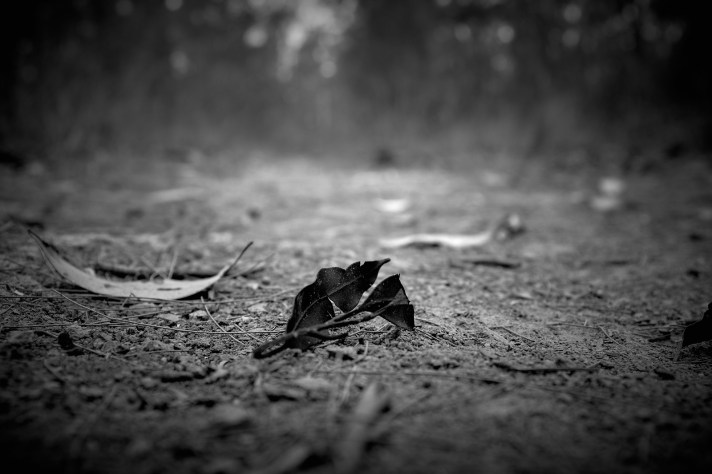
Singed but not burnt leaves
For 60 000 years the accord held. Until Europeans looked up this wondrous Terra Nullius with their conqueror eyes. Gradually, mine by mine, urban space by urban space, farm by farm, dry river by dry river, development by development, the land fell to the conquerors in their quest for economic gain, improved living standards and human development.
How can there be human development when the land is dry, empty and all aflame? When the trees and animals burn, when rivers fill with dead fish, when eon aged aquifers are sacrificed for bottled water no better than that flowing from our domestic taps; how can there by human development? When the air is hot and filled with fire smoke, how can there be human development?
We knew this would happen, the fires and drought. We were warned 30 years ago. We ignored those warnings. Our top fire fighters tried to warn our federal government months ago, but the government was not interested in listening, or even talking. So the fires, long forecast but never believed in, came. As did the smoke outside my window.
Are we—humans—so naive as to think that we are above the limits of our world? That in conquering the land we control it and its forces? Do we, the heirs of our conquering forebears, know the land and its needs and retributions better than those who have had 60 000 years of rapprochement with that same land? In our modern hubris and arrogance we have ignored the needs of our land and now the land burns and we suffer. There is no human development in these fires.
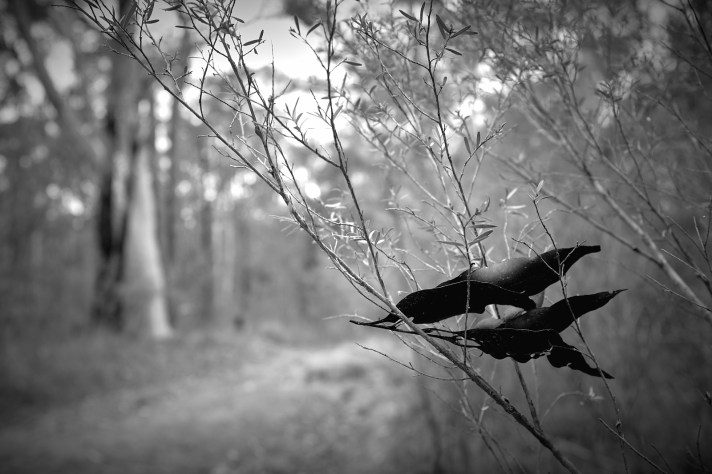
Singed leaves stuck in a shrub
Not content with fundamentally changing the natural world of our planet, we have now set our sights on discovering and exploring other planets to conquer.
Why do we persist in seeking greener pastures? Is it because of our little acknowledged guilt in creating our brown, dry, degraded backyard? Do we, deep down, understand the travesty of our behaviour, of our breach of the long-ago created accord with nature? Do we seek cleansing absolution in a fanciful future in faraway places?
Truely, we humans are a perverse species.
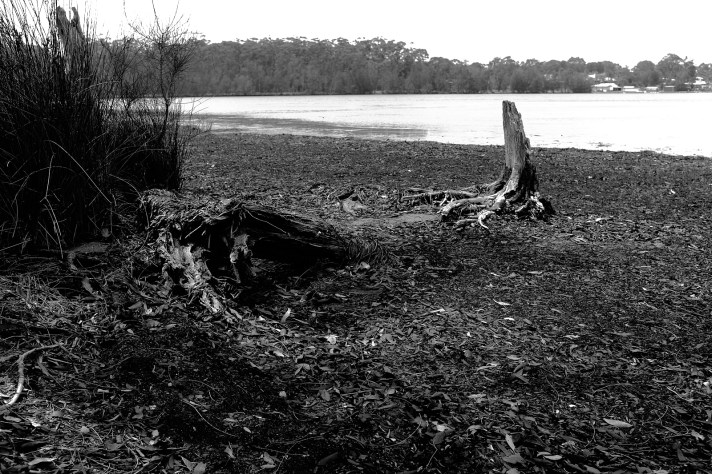
A beach of singed and burnt leaves
 Words and images