Words and images

Philosophy on the streets

What’s in a name? — 2022-08-19

What’s in a name?


During my days as a photography student, many years ago, I was always challenged by studio work. It wasn’t the studio per se—the space, the lights, the props—that disquieted me. Rather, it was how all those aspects were to be brought together in front of my camera’s lens. I felt inadequate in this challenge so much so that I focussed my photographic efforts on subjects outside the studio. I went outside into the streets looking for scenes, objects, people, activities whose nature, arrangement or lighting caught my eye. And those I imaged.
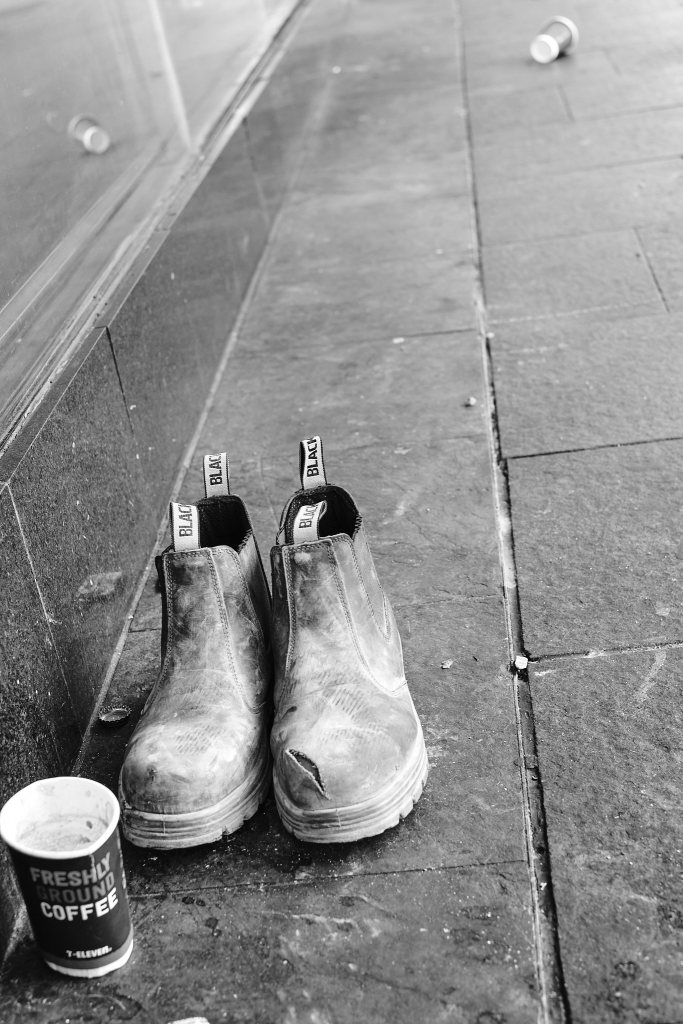

Over the years I developed a nomenclature for much of my style of image making. The smallish, often unnoticed, objects I imaged I called extracts. Extracts were captured and removed from their context—time, location, culture—and isolated onto various sizes and types of photosensitive material. Extracts—the unusual, the familiar, decontextualised, isolated—were what really piqued my attention.


They still do.


And, in my older age, after much deliberation about the nature of photographs, I decided they required a new nomenclature, one better reflective of their nature: moments of place or extracts of time.
For what is a photograph but a moment of time recorded, a scene extracted from its context. Time is stilled, excised from our perception of its flow, forever preserved. As was the scene, so shall be the image, forever (notwithstanding any subsequent artistic manipulation).
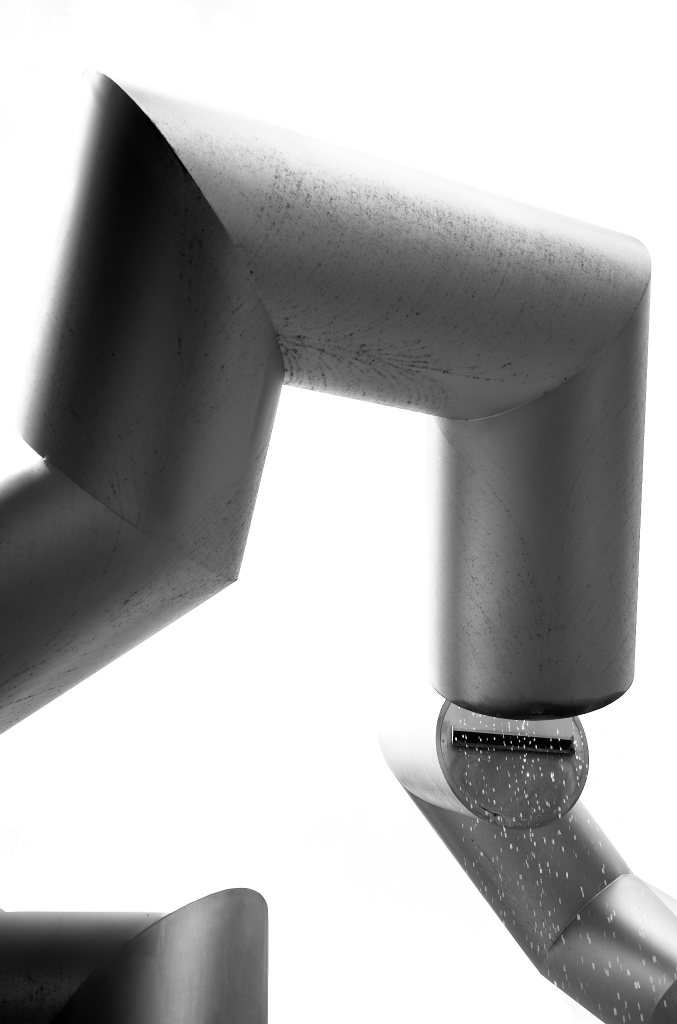

Extract or not, all photographs are subject to a post-exposure culling. Many images (under exposed, blurry etc) are simply and easily discarded, deleted from a memory card or hard drive (or thrown into the bin if on film). Others lie deeply buried in islands of ones and zeros, perhaps listed in a catalogue, perhaps not. They are abandoned: existing but not wanted or needed, accessible but not sought. A select few images experience a brief flurry of interest: printed, shared, published.


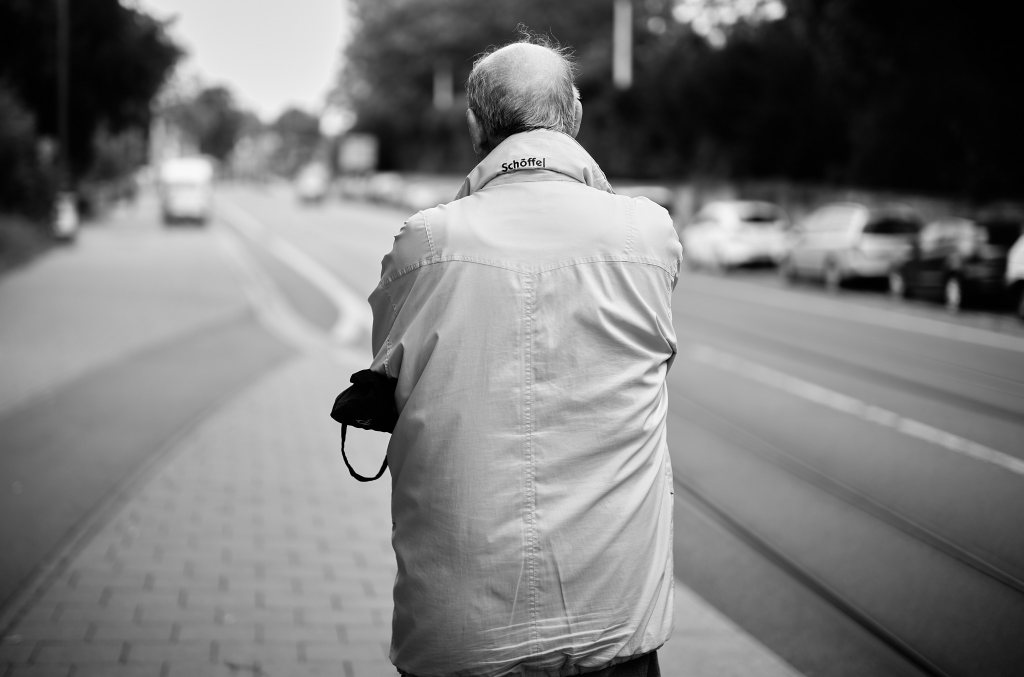
Whatever their disposition, a photographic collection contains a history of its creator’s awareness, a timeline of the locations visited, a sequence of interactions with the world. In short, photographs are our past, documented in fractions of seconds, our own, personal, moments of place, our individual extracts of time, excised from the trajectory of life leading towards our ultimate end.


Life—all life—abounds outside the studio, in the streets, beyond the towns, in dark alleyways and on bright sands. As a photographer we document what appeals to us; we take instants of time and place and give them an external existence. And in doing so the images say more about us than they do about their subject.


So here’s to extracts.
New Year and ephemeral change — 2017-01-02

New Year and ephemeral change

2017 is now upon us. For many of us a new year brings hope of a different, if not better, life than we had in the previous (and previous and previous and previous…) year. After all, that’s why we bother with New Year’s resolutions: great aspirational goals, too short lived in the doing, and too ineffective in the end. One might even suggest that such resolutions are (too) simple solutions to complex problems of human behaviour. But at least they represent good intentions for all their shortcomings.

When deciding we want to change something—our life, our car, our family, whatever—we compare what we now have with what we believe we will have after the change. Sort of like looking one way then the other before stepping out to cross a road.

Looking one way we see the past. Memories of its failures, its barriers, its highlights, it’s nitty grittiness. But the shadows of that past, in which we now live, are strong, deep and pervasive. In them are buried lost and forgotten dreams, deeds and decisions. It is from this ghost that we wish to escape. Hence, we seek change.

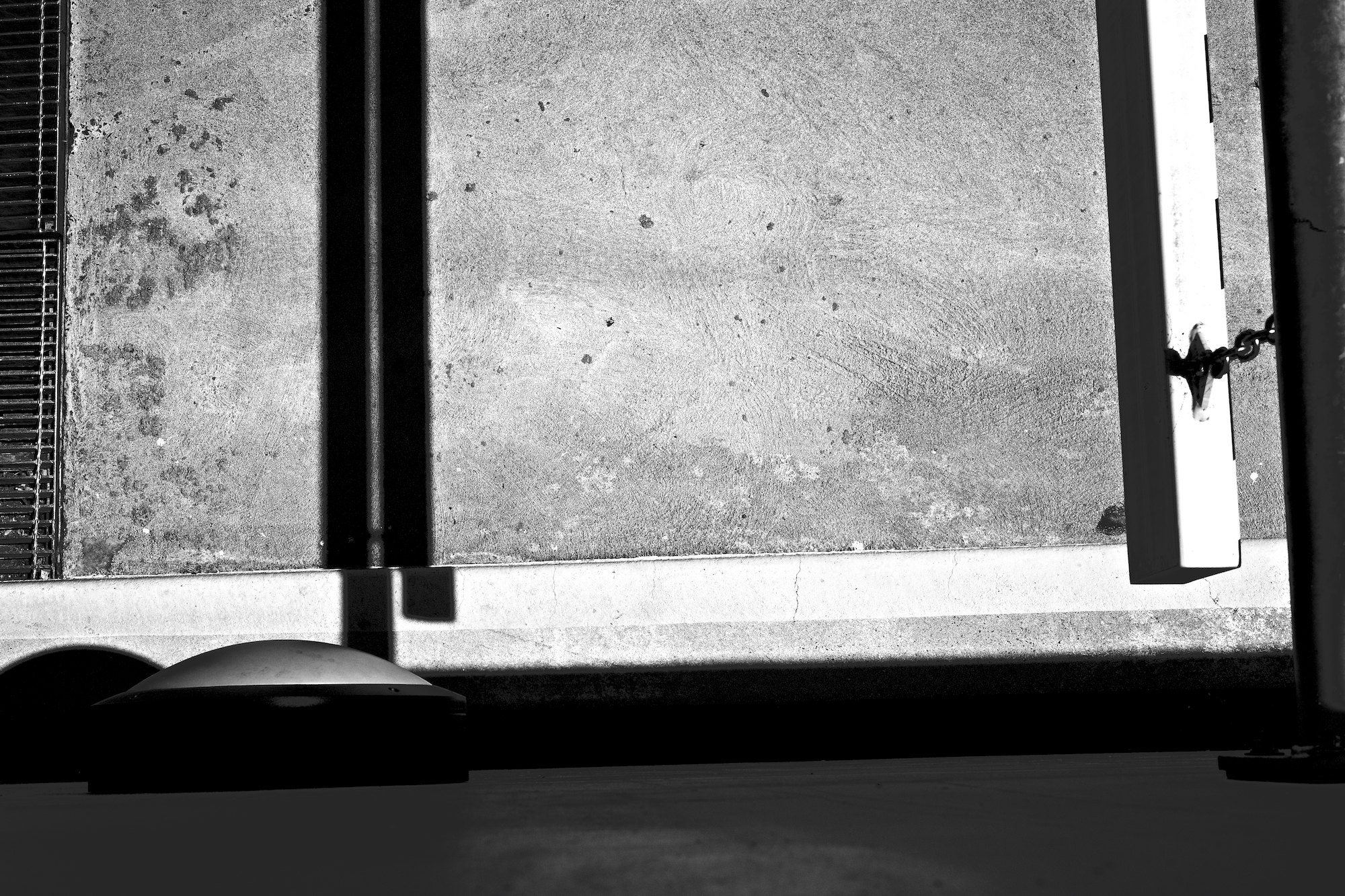
Gritty photo of concrete

So we look the other way, longing to see a future quite remote from the past. An open door leading to somewhere different and better, somewhere safer, somewhere in which we can escape the shadows of our past and feel cosseted from life’s too-great challenges and threats.

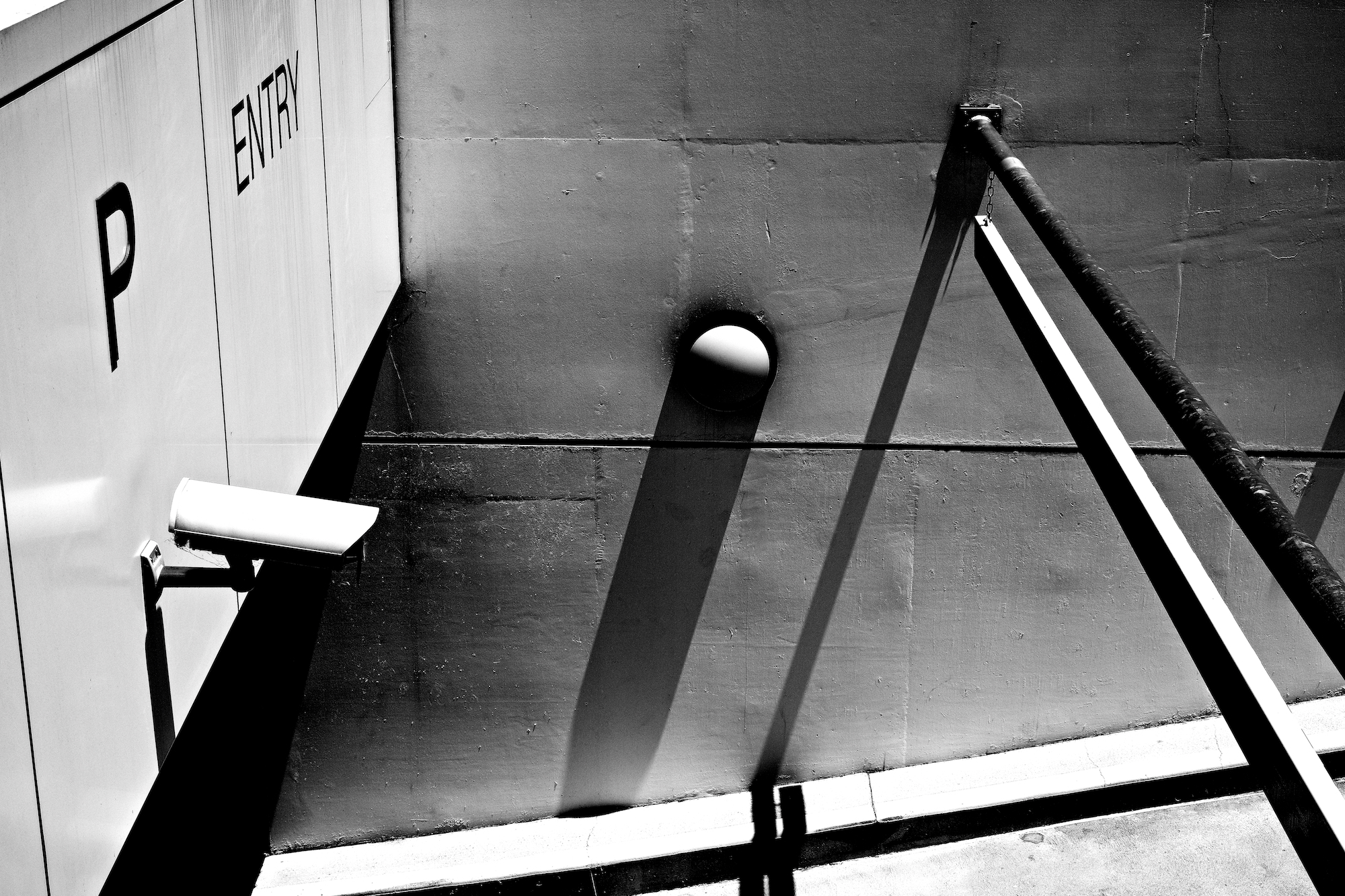
Gritty photo of entry into underground parking lot

For some—those who embrace change and persevere with its implementation—that open door does indeed lead to fulfilled expectations. These few are reborn, renewed, reinvigorated, their resolutions achieved.

Yet for the remainder—the vast majority—change is ephemeral. It remains but a desire, wishful thinking, providing comfort through imagination. The cost of change is too high, its benefits too low. So we maintain the status quo. But not quite.

In the act of seeking change we have indeed changed. Recognising the need to change takes us one step closer to that open door of idealised future. Meanwhile, our haunting shadows remain, but with less oppression; our challenges become clearer; our perspective broader. All the while the nitty gritty of our life continues to both repel and attract us.

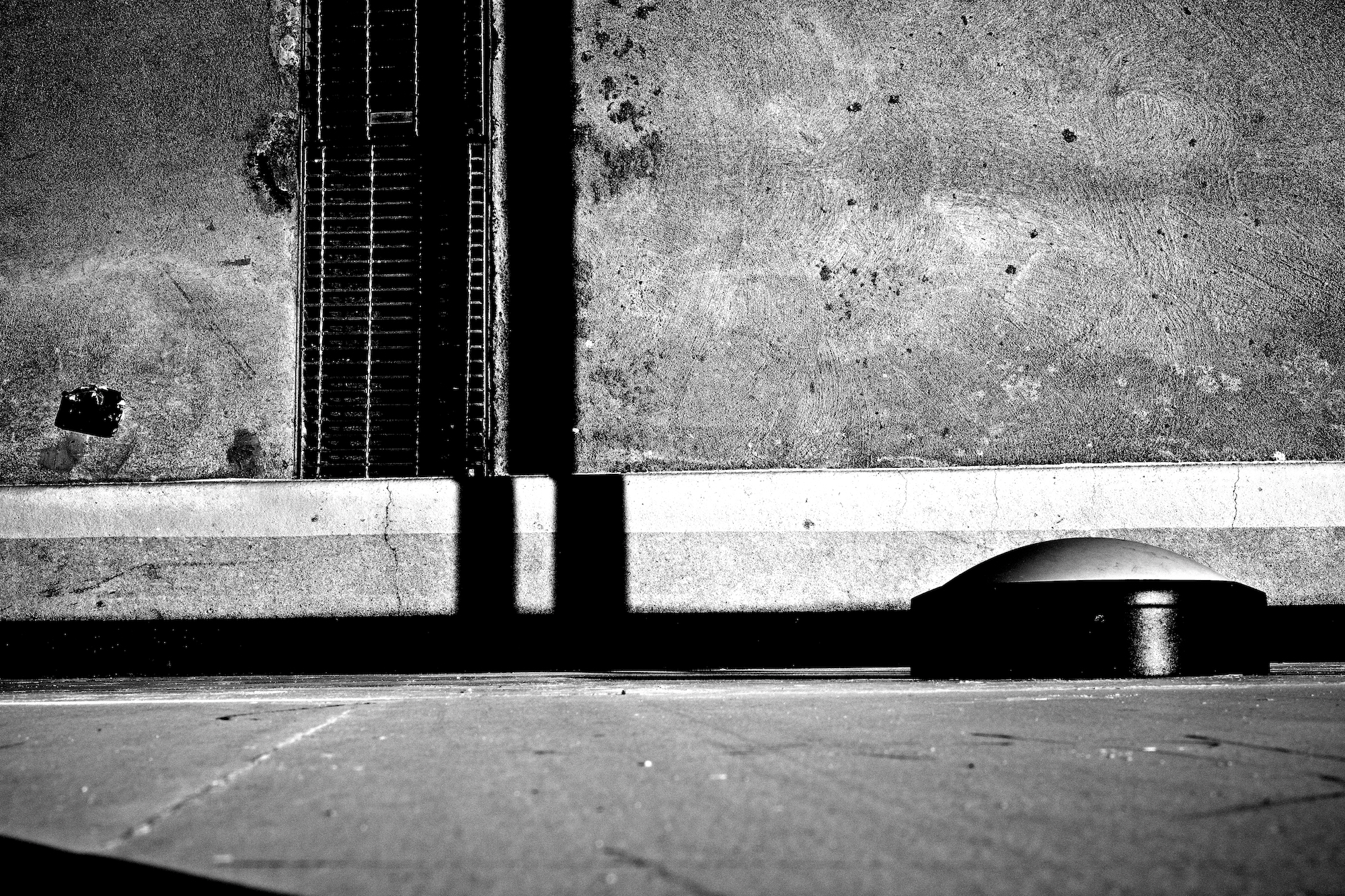
Another gritty photo of concrete floor

Life surely is perverse.

The empty night — 2016-12-22

The empty night

Empty city streets have always fascinated me, filled me with an emotion I cannot name.

My first exposure to this phenomenon—and when I first recognised it—was in London in the mid-1970s. Walking through the back streets towards Baker Street (to check out Sherlock’s abode, of course) generated this feeling of emptiness, of spaciousness, of loneliness, of the lack of life, human or otherwise.

A decade later, the same emotions arose, but in a different set of back streets.

Since then the feelings have come and gone as I explored and wondered the back streets of various cities around the world.

Always that feeling of emptiness and loneliness; of something alien.

Back streets at night are even more poignant and emotive.

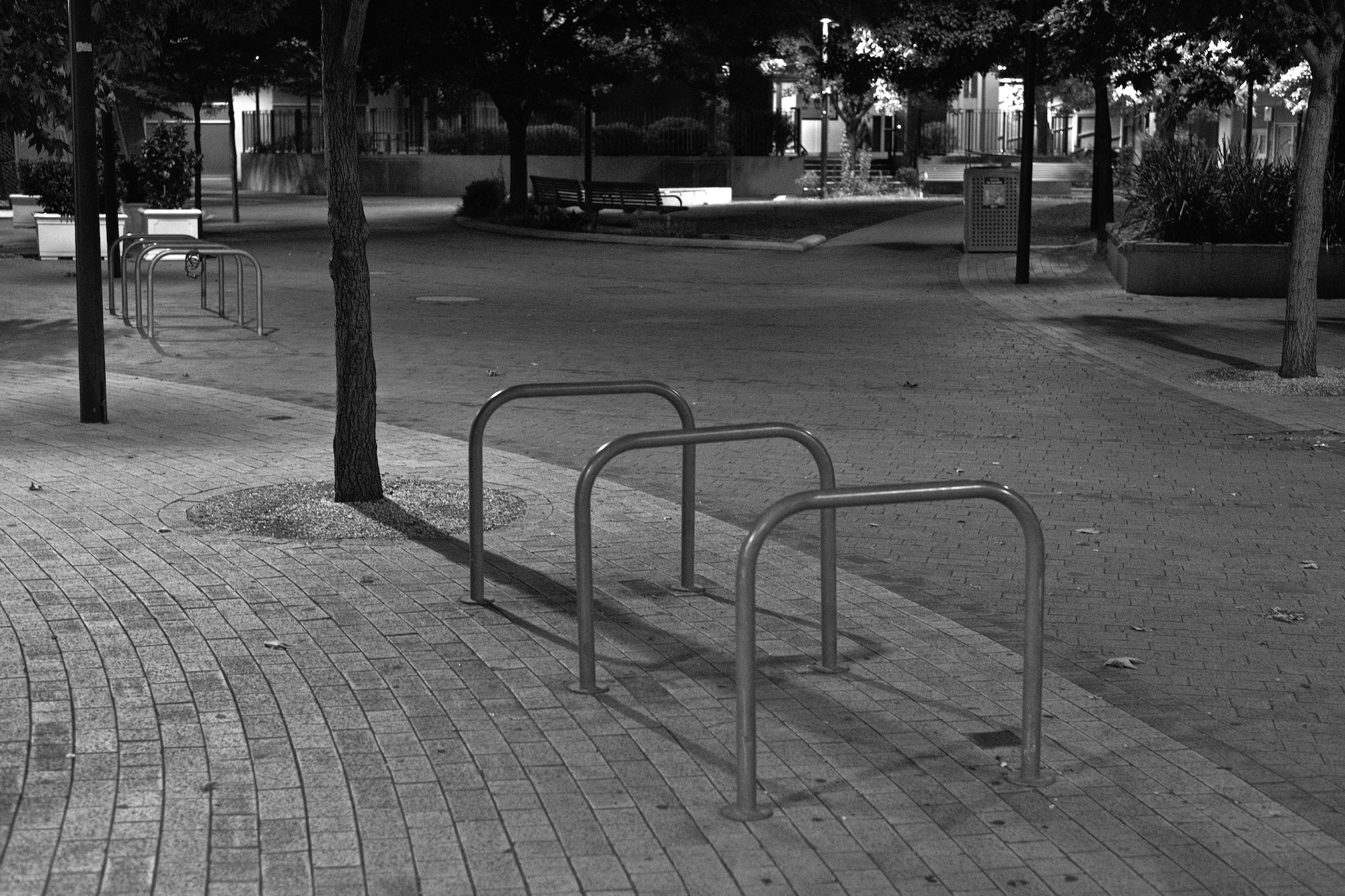
Empty street scene at night with bike racks in the foreground

There, diffused in artificial light, buried in shadows, fading into the black background, is the architecture of the absent working world: vacant bike racks, deserted streets, empty footpaths, silent coffee shops, soundless offices and customerless shops.

Counterpoised against this architecture of construction is the architecture of nature: planted trees, beds of wilted flowers, dried lawns. The constructed enhanced—and humanised— by nature. But there is nothing natural about this artificial entwining of the built and the grown. What is constructed is an overwhelming tension between the vacant now, the immoderate past and the dormant future.

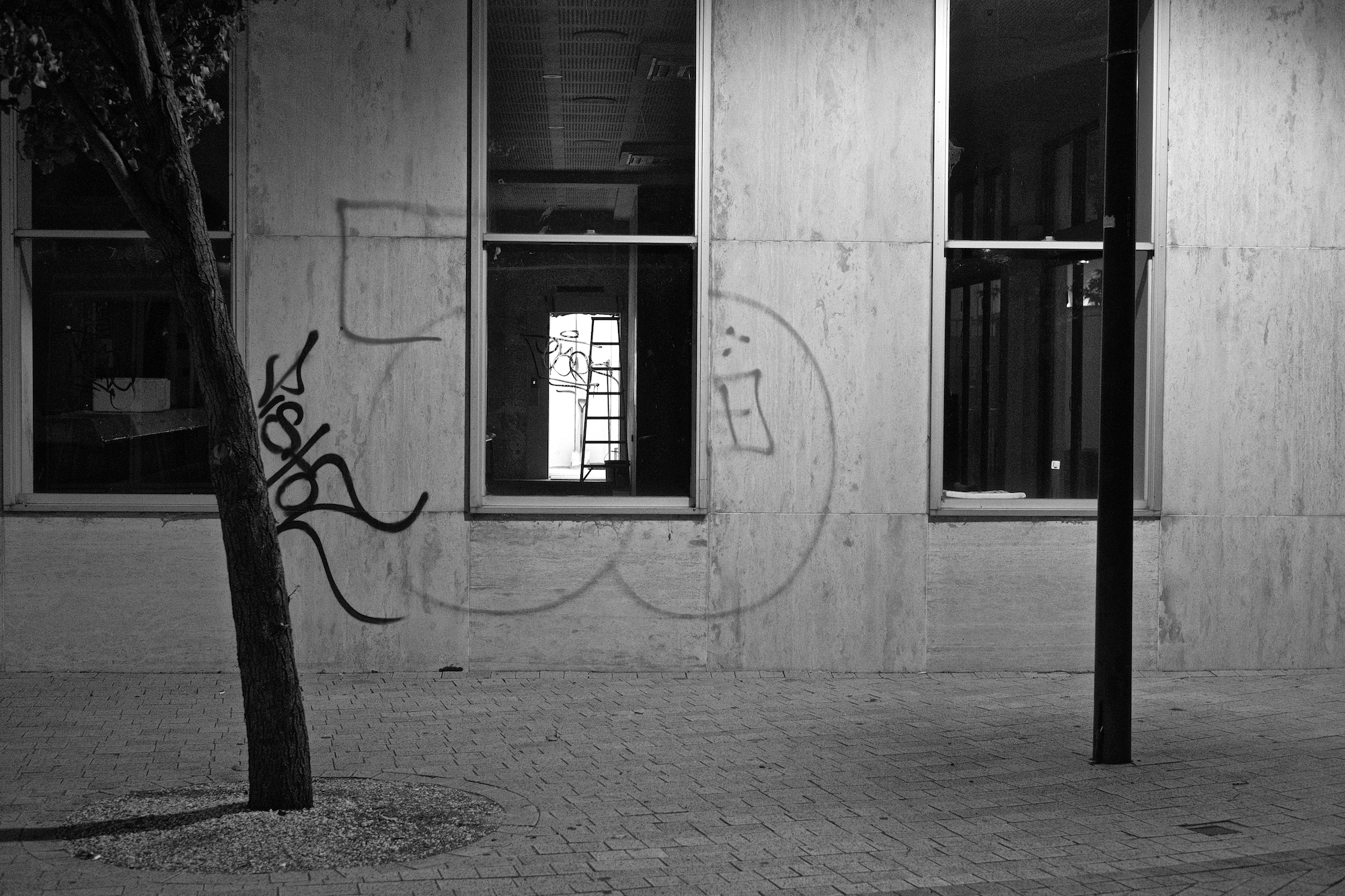
Sometimes though, in this shadowed world of greys and blacks, are the signs and symbols of expressed life and half finished work.

Night scene of wall with graffite

A workman’s ladder and shovel in an empty building. Graffiti. Sometimes a discarded bottle or can. Detritus of life; past life in progress; future life suspended in the unfinished past. Entropy facilitating time and life.

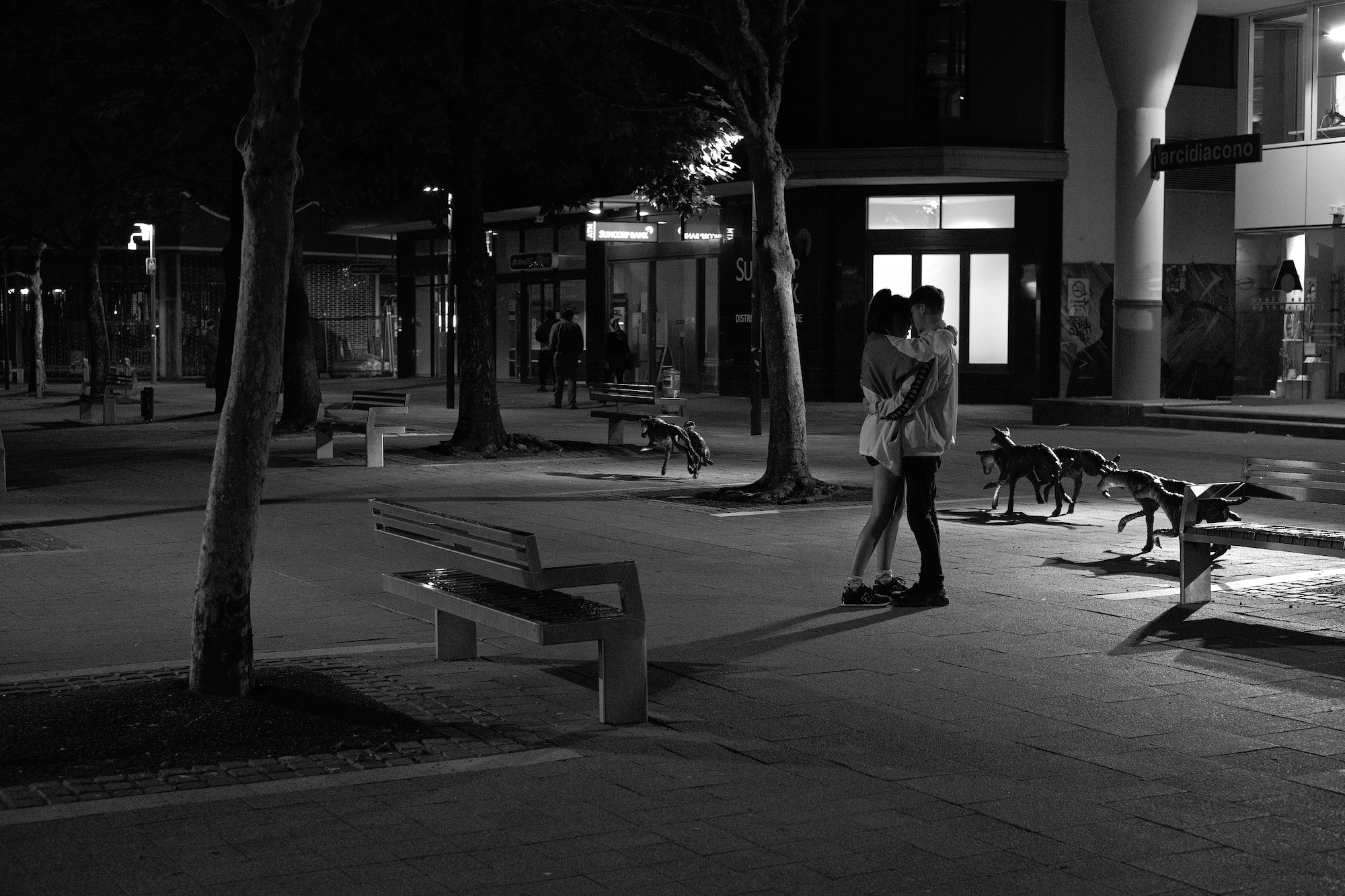
Yet these empty, dark, silent streets are not always so alien, so half-filled with life. Often they are also the backdrop to tragedy and comedy, to anguish and joy, to forgiveness and error, to compassion and hate. Private—or not so private—emotions shared in a public space. Hidden, but apparent to those who see.

Couple hugging in a street at night

Backdrop or not, empty, shadowed, back streets reflect the emptiness and shadowed cosmos in which we dwell. Perhaps, for me, they also reflect the inevitable emptiness and shadowless void of death which awaits me as it does all of us. Maybe this is why I am ambivalent towards such scenes: life hidden in the shadows of death.

Life is perverse.

Shadows — 2016-12-05

Shadows

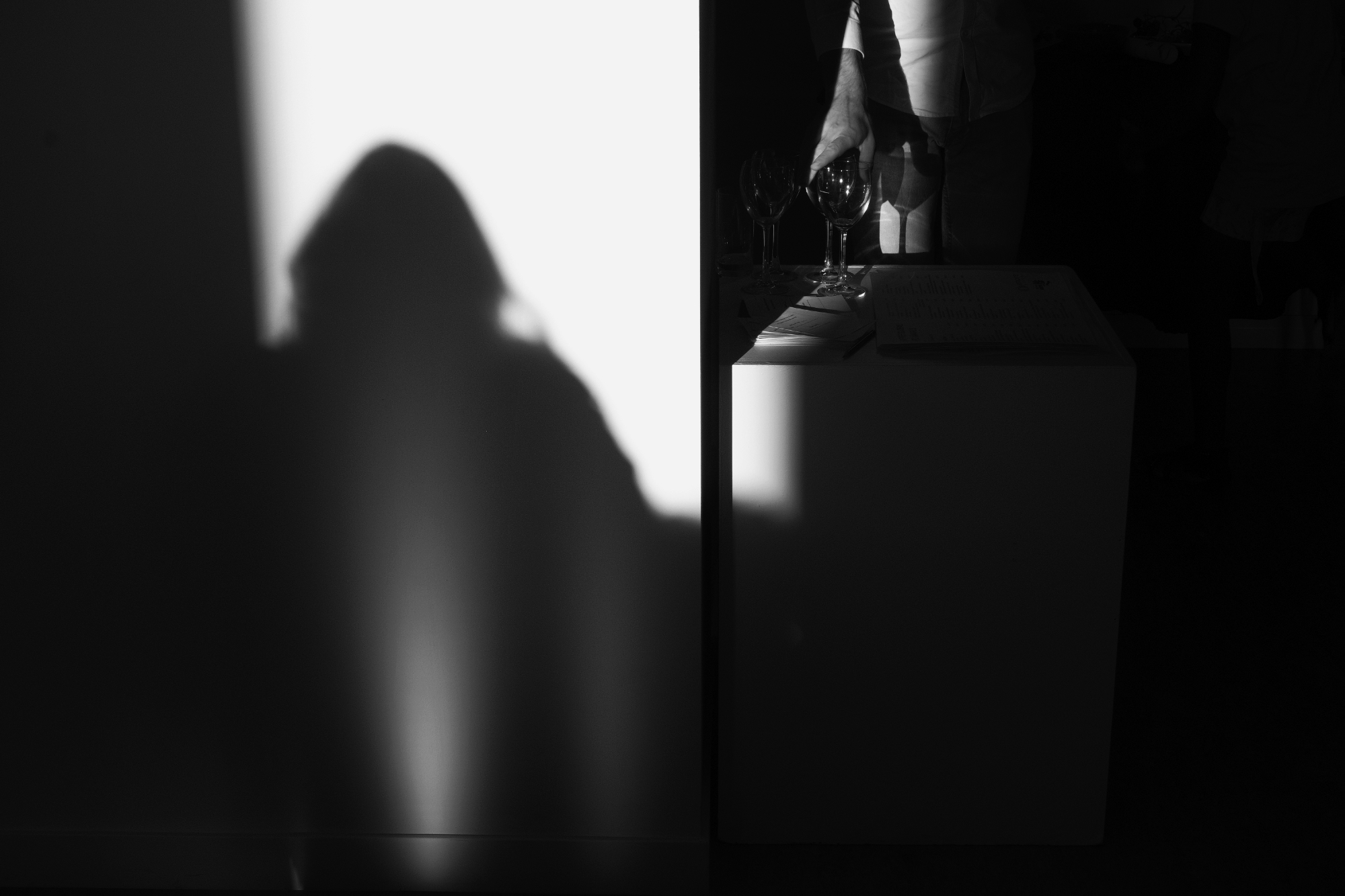
Shadows, those volumes of darkness beloved of visual creatives—painters, photographers, movie directors—enfold us in their invisibility. We see or do not see them as our mood varies, as our view dances from point to point creating a gestalt, even a story, of our reality.

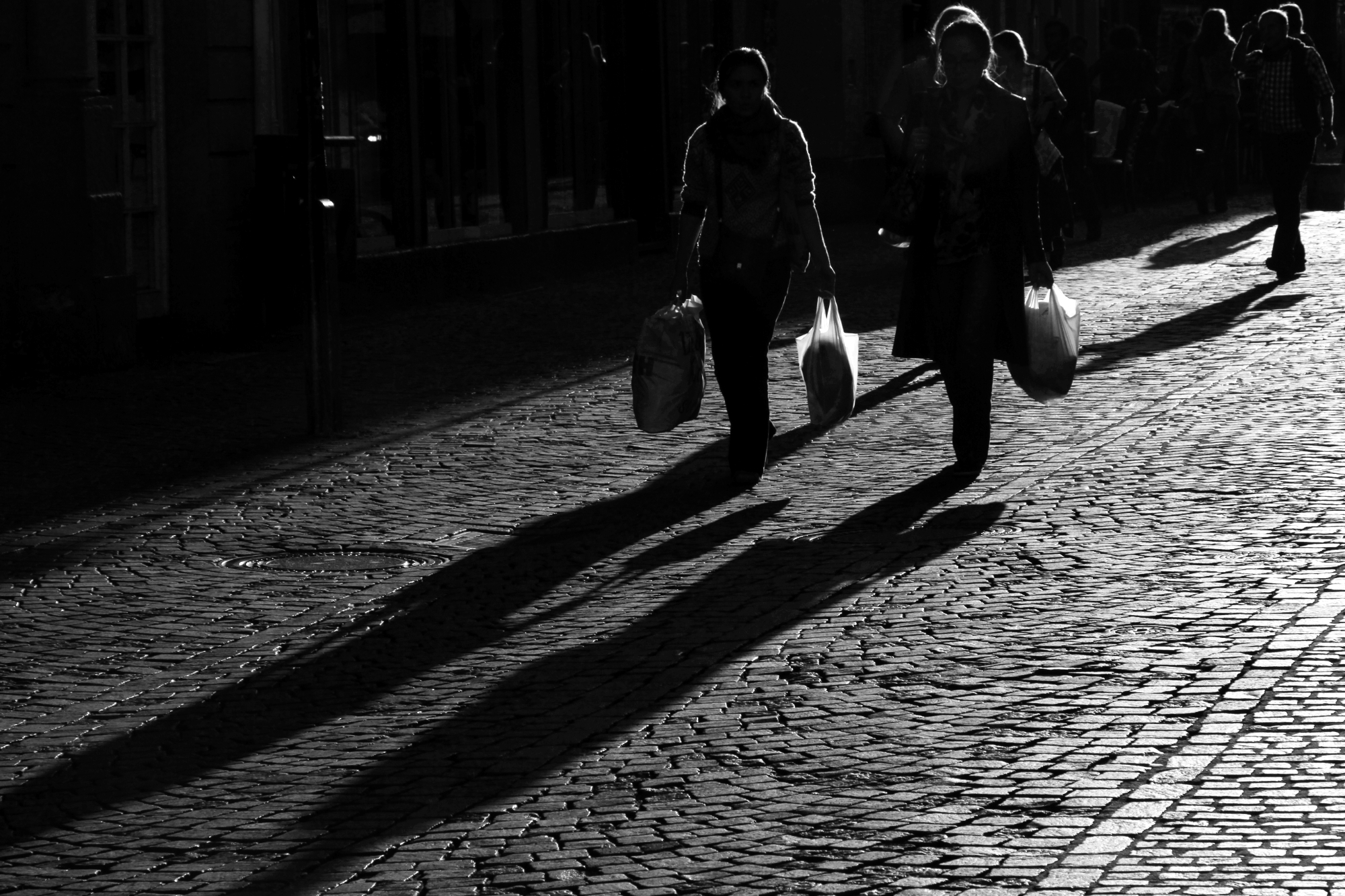
We see the world writ large in shadows, often imposing, often subtle. For their part, shadows protect their charges in anonymity allowing our imagination to construct what is not, or is only partially, visible. Yet many objects under the influence of shadows use that protective cloak to display their own innate beauty, to create their own contrasting gestalt, their own story.

Backlit people walking down a cobblestone street

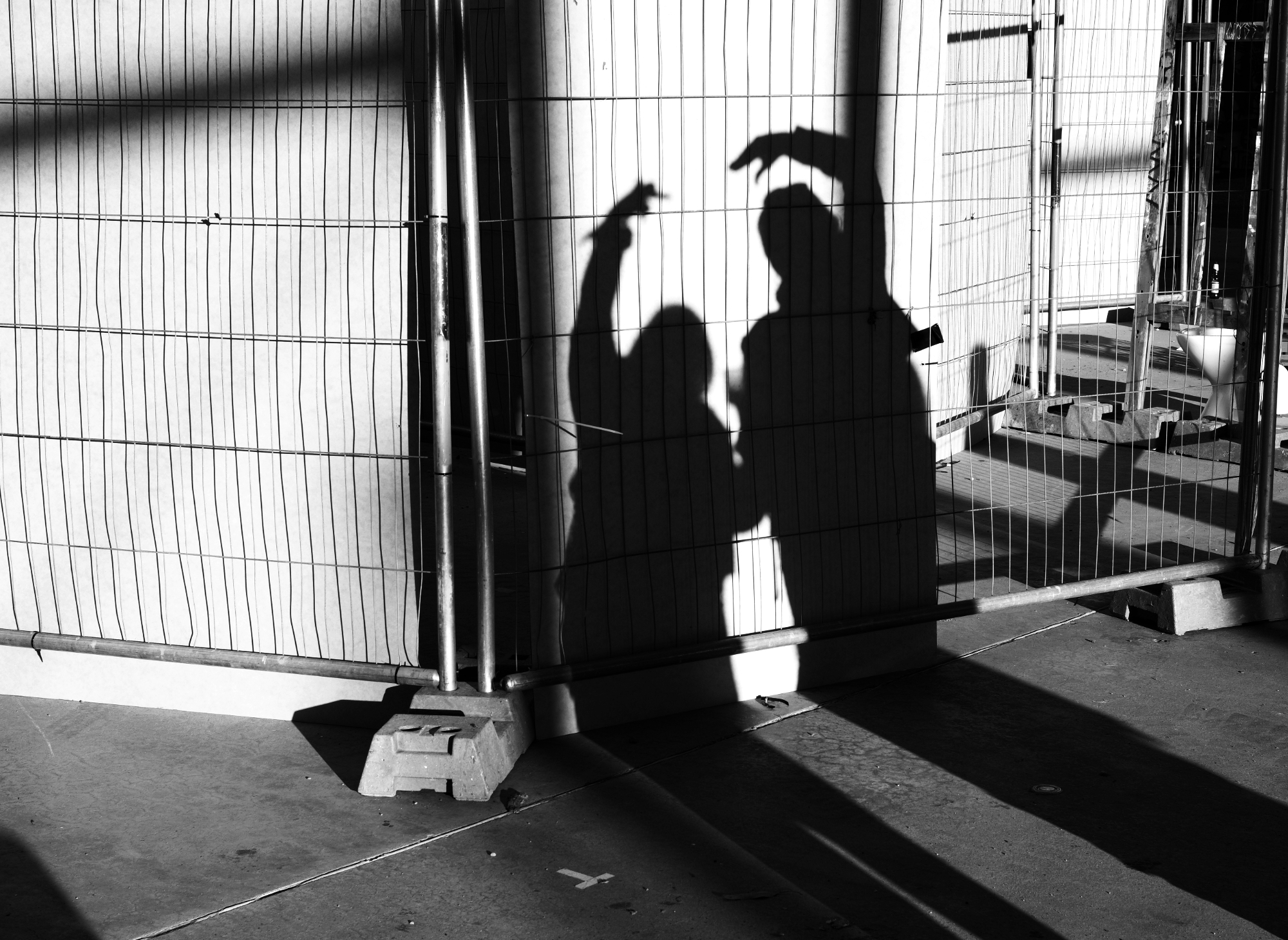
While most shadows are arbitrary, a product of the the interaction of the vagaries of nature—wind, sun, season, time of day—and object, others are deliberate creations. Amusements for our humour, our imagination, our sense of fun. We create, destroy, manipulate, intercept light just as we create, destroy, manipulate and intercept the physical and biological world so dependent on that light and its resultant shadows. Like us and their sibling natural shadows, created shadows are ephemeral. What remains after their passing is just a memory or an image of absence.

Shadows of two women creating an arc on a wall

By means deliberate or accidental, shadows can also reveal, through their absence, that which is there. Such non-shadows are as pervasive and invisible as the shadows with which they co-exist. And when they do reveal themsleves we forget the shadows and their old gestalt. Instead, we create a new gestalt, a new story, centred on the non-shadow. If we are lucky, or so inclined in our storytelling, that new story is richer, more fulsome and more profound than the old one told by the shadows alone.

A shadowed hand reaching for a glass

It is these shadow/non-shadow stories that reflect our inner selves, that tell us who we are and where we stand in relation to light and the cloak of shadows.