Words and images

Philosophy on the streets

The stories we (don’t) tell — 2022-12-05

The stories we (don’t) tell

We all like a good story: happy or sad, of adventure, of loss, of perseverance…of experiences in and of life.

Storytelling is fundamental to us as humans. We tell stories, listen to them, seek them; sometimes we avoid them. Stories inform, persuade, challenge, entertain, strengthen and even weaken or break relationships. They punctuate our lives; they subsist in our being, in our environment. Without stories our lives loose much of their meaning.
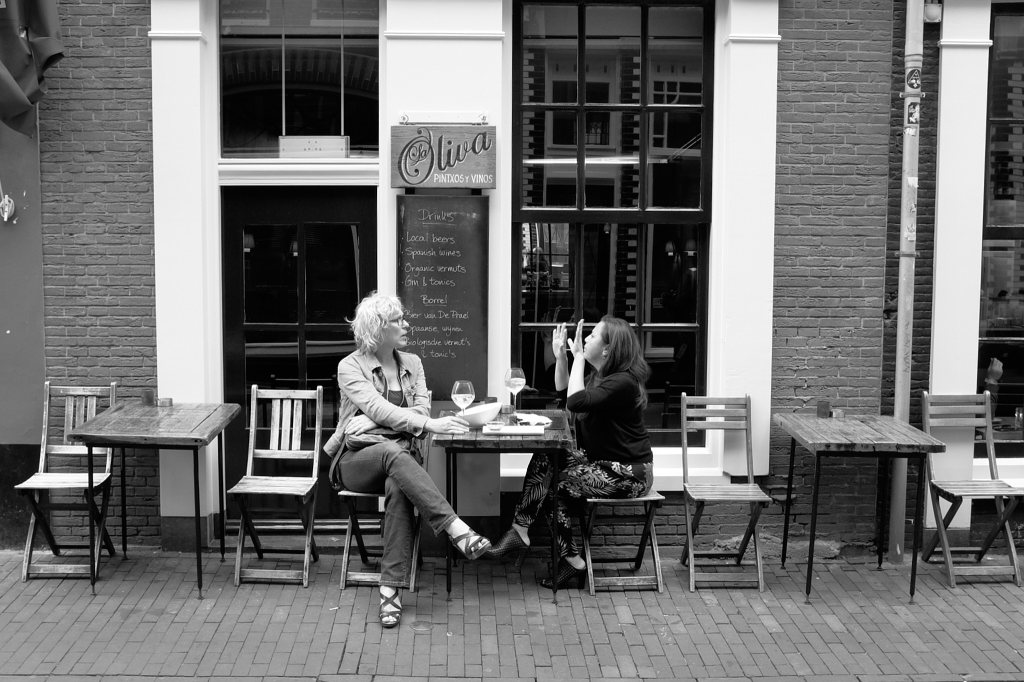
Two people in a cafe sharing a story with one person using expressive hand movements

Many stories are true, reflecting lived experience. But some are false, deliberately so. What makes one story true and another false is the basis of the story and its intent.

A true story is founded on, and relates, an event, action, process that actually happened. And while the telling may be embellished for storytelling purposes its intent is to share a personal experience. In the sharing may be found release, comfort, understanding, support, affinity, oneness, for both the storyteller and story taker.

On the other hand, a false—untrue—story, even though it may be based on some truth, has a different intent. Such a story may be designed to persuade, entertain, mislead, confirm biases or otherwise support a particular action or point of view.

When consuming a work of fiction—in any medium—we usually suspend our disbelief and enjoy the tale. We know it’s false after all. But sometimes, for some of us, our disbelief is replaced by belief, our biases reinforced, our beliefs confirmed. Some of us also consume truth as falseness, more evidence to support our beliefs and biases.

Fiction intended to change belief has a history as long as that for fiction intended to inform morals and behaviours. These later fictions are found in fables, parables, allegory, fairy stories; the bedtimes tales we tell our children both to instruct and entertain. To such fictions we respond (or expect the story taker to respond) with reverence, humour, belief, acceptance or understanding. The more profound the intended message the more we—the story taker—are challenged to understand, to grasp the insights offered through falsity.

So significant are stories to us that we laud successful stories and story tellers: Academy Awards, Pulitzer Prizes, Nobel Prizes, Booker Prizes, Walkley Awards. So many awards; so important to so many societies. But only for stories that exist in physical form. 

Verbal, oral stories are transient, not captured in a document, physical or digital. Yet such stories have been around for much longer than recorded stories. First Australians, for instance, have been telling stories for tens of thousands of years. Such stories persist because of their importance to those societies; they are part of the culture, integral along with behaviours and beliefs.

Then there are other stories, not spoken or recorded.

Some stories exist in our actions. They are implied. Open to reading and interpreting. There to be consumed if noticed. More personal than the truest ‘true’ story; their intent unclear, transient, confused. So much richer; so much more profound. So fleeting.

Two smiling women, one highlighting a banana she has placed at her waist.

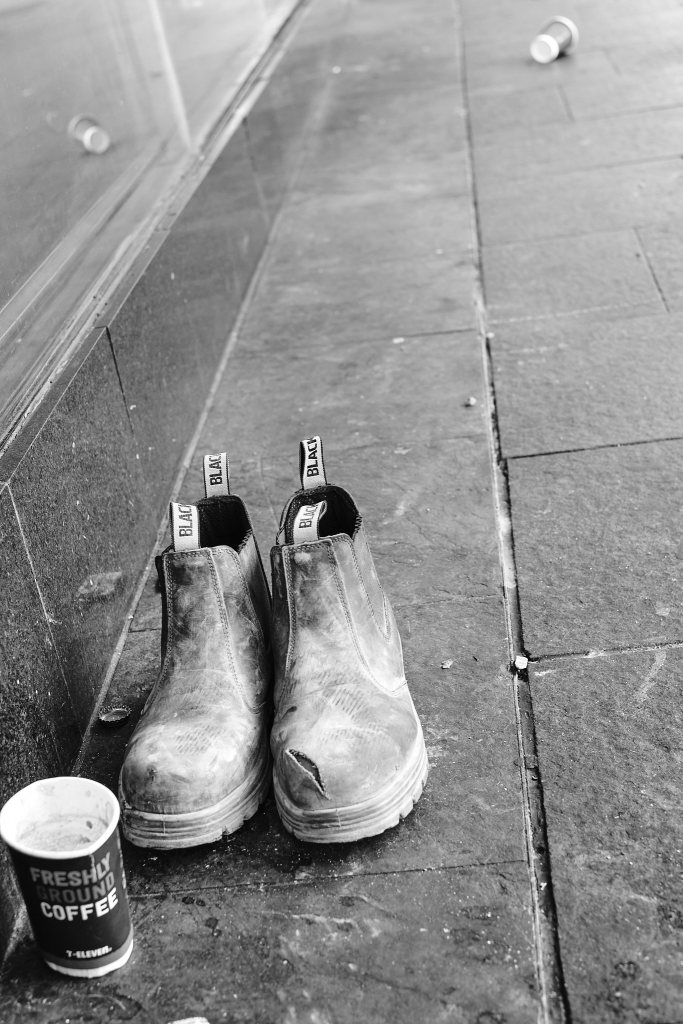
Finally, there are stories resident in the physical world that will never be told. Objects abandoned, buildings derelict, weed strewn vacant lots. The detritus of our society. How did these come to be? What events lead to their current state? What laughs, tears, fights, loving occurred there or were occasioned by them? Was the coffee cup discarded before it was empty? Was the coffee enjoyed? Why was it discarded just there? While there is always a back story those stories will never be told because no-one is interested in them; they are the trivia of life, of our civilisation. Yet those stories tell us as much about ourselves as any other story. They simply have no story teller. And no story taker.
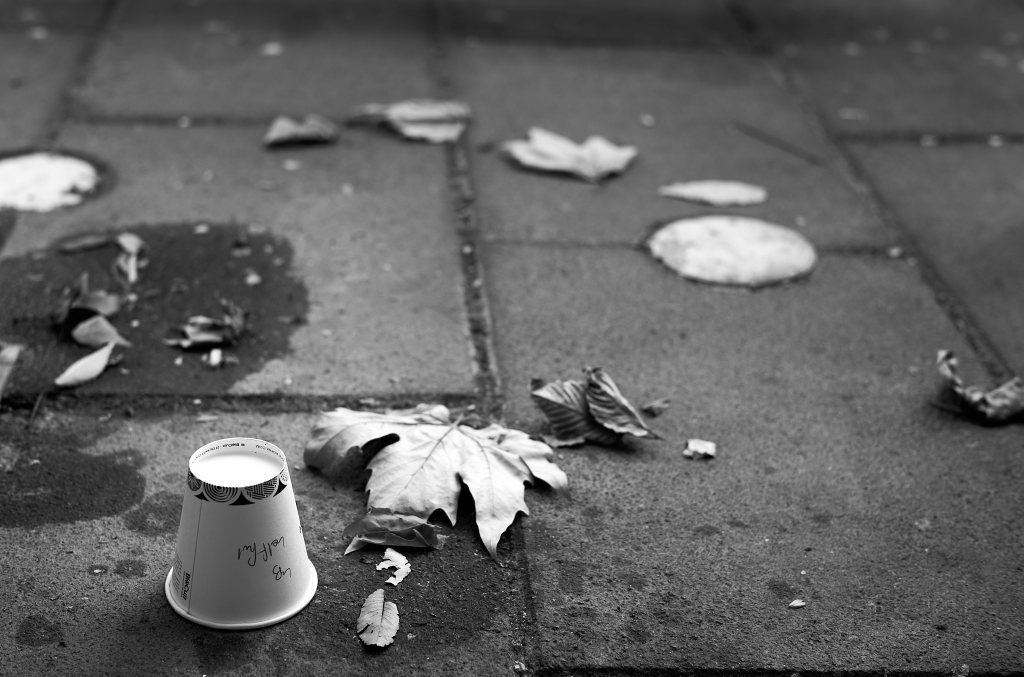
A discarded take away coffee cup on the ground surrounded by leaves and detritus of the city
What’s in a name? — 2022-08-19

What’s in a name?


During my days as a photography student, many years ago, I was always challenged by studio work. It wasn’t the studio per se—the space, the lights, the props—that disquieted me. Rather, it was how all those aspects were to be brought together in front of my camera’s lens. I felt inadequate in this challenge so much so that I focussed my photographic efforts on subjects outside the studio. I went outside into the streets looking for scenes, objects, people, activities whose nature, arrangement or lighting caught my eye. And those I imaged.


Over the years I developed a nomenclature for much of my style of image making. The smallish, often unnoticed, objects I imaged I called extracts. Extracts were captured and removed from their context—time, location, culture—and isolated onto various sizes and types of photosensitive material. Extracts—the unusual, the familiar, decontextualised, isolated—were what really piqued my attention.


They still do.


And, in my older age, after much deliberation about the nature of photographs, I decided they required a new nomenclature, one better reflective of their nature: moments of place or extracts of time.
For what is a photograph but a moment of time recorded, a scene extracted from its context. Time is stilled, excised from our perception of its flow, forever preserved. As was the scene, so shall be the image, forever (notwithstanding any subsequent artistic manipulation).


Extract or not, all photographs are subject to a post-exposure culling. Many images (under exposed, blurry etc) are simply and easily discarded, deleted from a memory card or hard drive (or thrown into the bin if on film). Others lie deeply buried in islands of ones and zeros, perhaps listed in a catalogue, perhaps not. They are abandoned: existing but not wanted or needed, accessible but not sought. A select few images experience a brief flurry of interest: printed, shared, published.


Whatever their disposition, a photographic collection contains a history of its creator’s awareness, a timeline of the locations visited, a sequence of interactions with the world. In short, photographs are our past, documented in fractions of seconds, our own, personal, moments of place, our individual extracts of time, excised from the trajectory of life leading towards our ultimate end.


Life—all life—abounds outside the studio, in the streets, beyond the towns, in dark alleyways and on bright sands. As a photographer we document what appeals to us; we take instants of time and place and give them an external existence. And in doing so the images say more about us than they do about their subject.


So here’s to extracts.

Multi-coloured opinions — 2020-08-05

Multi-coloured opinions

Most of us see the world in wonderful colour: bright, subdued, brilliant or dull. Even those with colour blindness generally see in colour, though without the colour range of those lacking the affliction. Many animals, too, live in a colourful world. And dreams come in colour.

Without colour our world would be lacking. Colours allow us to differentiate otherwise identical objects. They influence our emotions, provide camouflage for birds and animals, and enliven our living rooms with huge coloured televisions. (Anyone remember black and white television?) The prospect of art without colour is most depressing and would certainly lessen its impact.

Overall, I guess we can say that we take colour for granted with all the nuances it offers us about the world we live in.

It’s a pity then that we don’t understand our opinions in terms of colour.

Too many people believe that opinions exist in a 2-bit colourful world. Issues are binary, black or white. There are no middle greys; no extenuating circumstances; something is either right or wrong. Sometimes it is; mostly it isn’t. It’s ideology at work: conservative/liberal, left/right, progressive/traditional.

Currently, we are amidst a largely 2-bit colour debate on the Caronavirus. It’s real; it’s fake news. It’s the flu; it’s much more than the flu. We should eradicate; eradication is not possible, we should eliminate. Masks should be worn; they infringe our freedom and legal rights. Or they work or don’t work. Hydroxychloroquine works or it doesn’t. We should be in lockdown/we need to open the economy.

So much black; so much white.

It’s largely the same with the climate crisis. Or is it climate debate? But at least this issue has some shades of grey: methods of remediation and minimisation, many of which make sense on their own merit. Or do they?

Eight-bit grey discussions allow some nuance, rather like limited colour vision. They also allow more scope for consideration of options, for changing views based on logic and evidence. Sometimes. 

Sixteen-bit grey opinions and beliegs represent an even more open climate for discussion, with many more nuances to consider and influence opinions and decisions.

Scientific debates tend to be cast in greys because they generally focus on a small part of our understanding of how the world functions. Even so, most scientists are prepared to change their views and theories when confronted with overwhelming evidence counter to their current understanding. Thomas Kuhn explored this process of changing scientific theory in his 1962 book The Structure of Scientific Revolutions. Unfortunately, such flexibility of thought is untypical of political debates and contentious issues except when it is politically expedient to do so. 

So much of current political debate, especially in two party (2-bit colour) states, is cast in terms of black/white or limited shades of grey, or both simultaneously. We need only look to America for evidence of this behaviour.

Open, honest and legitimate debate, however, requires our opinions and arguments to be in full colour, not grey, or black and white. Life is nothing but nuance; everything is a bit of this and a bit of that; connected to this or that. Nothing is pure: it’s all a shade of blue, or green, or orange or violet. Or of multiple shades of many colours, like rainbows.

Unless we explore opinions, beliefs and global challenges in a rich, nuanced conversation we limit our potential, our future, our experiences. We need coloured debates, not debates about colour (notwithstanding that this is an issue that needs to be addressed); not debates about right and wrong; not world views felt and expressed in black, white and grey.-

One might hope that this type of discussion may soon characterise our governmental institutions, especially our parliaments and political debates.

Our world is rich in colour. Why not our opinions.

Cancer, chemo and caring — 2019-06-04

Cancer, chemo and caring

My wife was diagnosed with cancer just before Christmas last. You know, that C word everyone dreads; that insidious disease that stalks and preys on us from within our body. That death sentence that can put a timeframe to our remaining days; that hangs over us, a Sword of Damocles, suspended by a thread of disbelief or hope.

Cancer. So many varieties. So many parts of our body its domain. For Margaret it was cancer of the breast. Just one breast. Caught early, but aggressive.

Like all those diagnosed with cancer, or any other disease or illness, Margaret was quickly gathered onto the Train of Medical Treatment (TMT). This is what you need to do… This is how we will excise your wayward bits… Tests were performed. Treatments were devised, plans were made, appointments were scheduled. In a rush; though not so rushed as to upset the TMT’s holiday plans. Surgery first. Then chemo, followed by radiation. Finally a lifetime of drugs. Take your pick. Any one or all of the planned treatments, if you want (but don’t take too long to decide). The more, the better the chances of living a long life without a return of the great C. 

And so it was and is. Surgery, twice. Then chemo. Now radiation.

Photo of chemotherapy room

Throughout all this life goes on, slotted in between nausea, fever, tiredness, a week in hospital, hairloss. Visiting grandchildren provide moments of joy. Life is lived day-by-day. 

Preconceptions of cancer and its treatment do not long survive the reality of being on the TMT. Each patient responds differently to the TMT journey. We read about these journeys on social media or in books. But seldom do we read about the TMT journey from the perspective of someone travelling on the parallel train, the Train of Community (ToC). 

Photo of the back of a bald head having the hair cut

On this train are those who provide the patient with transport, emotional support, thoughtful words, caring caresses, head coverings, treatment reminders; an endless rota of tasks; an endless supply of compassion.

I travelled—am still travelling—on this train, as are Margaret’s friends and our other family members. For them, journeys on the ToC are short: an hour now and then, lunch, coffee and cake, a phone call.

Though short, these journeys are essential for both Margaret and me. For Margaret, they maintain contact with the non-cancer world; they provide escape from that-which-is-always-there; they provide a reminder of how life will be again. For me, they share the role of carer; they provide the help I cannot or do so in ways I can’t emulate. They allow me moments of solitude, moments in which I can take stock of my life, my role as husband, partner, carer. Moments in which I gain the strength and focus  to continue riding the ToC. For that which is always there for Margaret is also always there for me; the same but different. Riding this community train allows me to gain insights into myself, to notice my shortcomings, to appreciate the temporality of life, the beauty of friendship and love, the value of being. 

Overcoming cancer is thus a journey on two trains, one fast, seemingly out of control, headlong to the cure; the other slower, with detours, tunnels, bright sunny vistas from time to time and friends. It’s a pity that cancer, and other potential life-terminating experiences, are needed before we reflect on our life, before we come to understand what we really value, before we fully appreciate what life has given us. Life is precious.

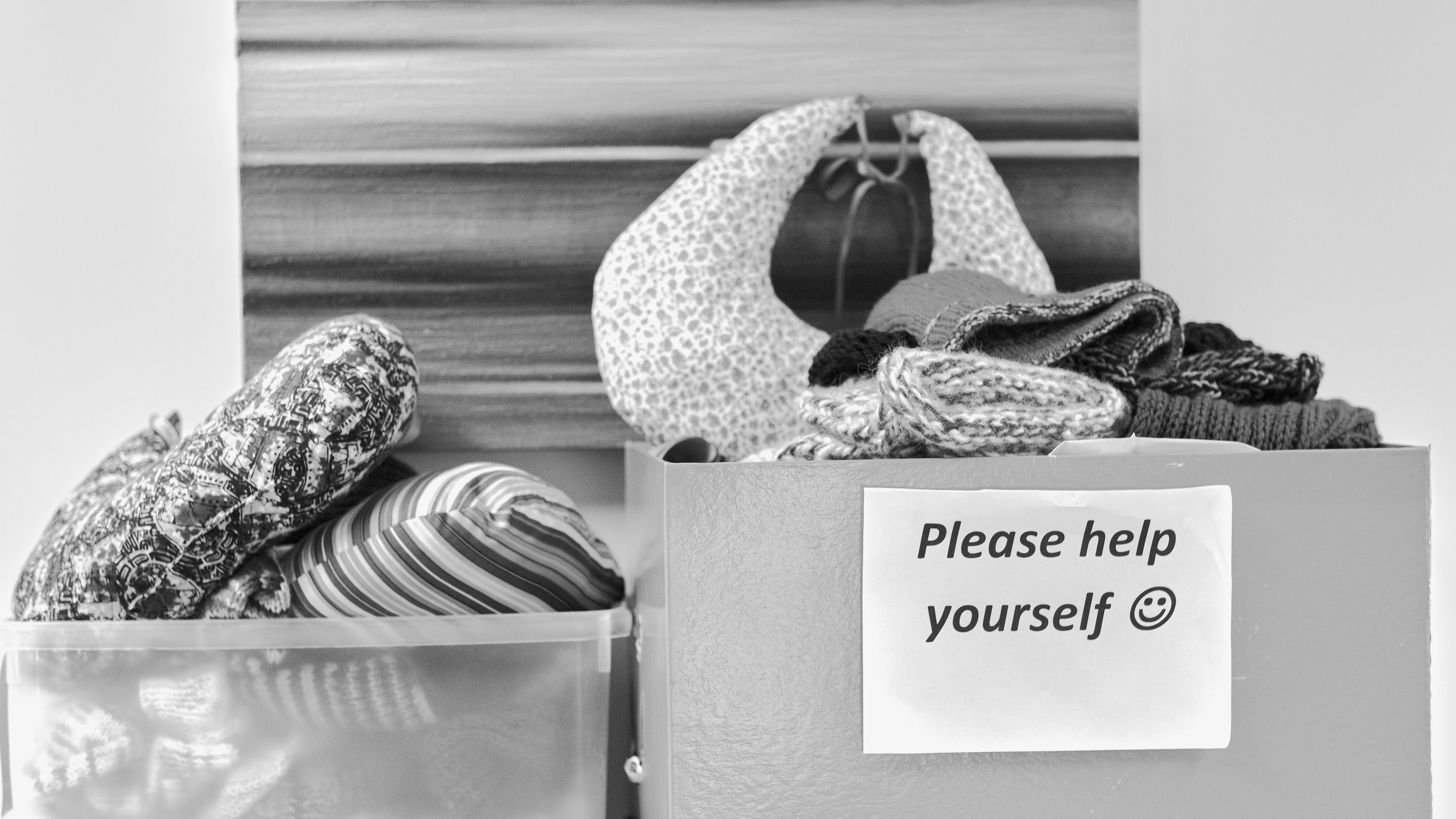
Photo of a box of give-away beanies