
Mungo. Lake Mungo. Mungo Man/Lady. Three terms, each with overlapping meaning, each with a different meaning. Each different but the same.
Fifty thousand years ago there was a lake at what is now Mungo, in western New South Wales. A large lake, covering around 200 square kilometres filed with wildfowl, fish, molluscs and other watery creatures. Around the lake wandered huge animals, megafauna, such as diprotodons, protemnodons and Genyornis. Trees and other vegetation completed the picture of a pristine, life-rich environment.
Over the centuries and millennia the climate changed, becoming drier. The lake became smaller and smaller, eventually disappearing altogether. As the lake dried so the vegetation became less, and then scarce, as it remains today. For reasons not fully agreed, the megafauna died out, rather quickly in evolutionary timeframes. Today’s smaller native animals eek out a survival where once there was plenty.
Visiting Mungo today one is challenged to see where once was water, challenged to imagine the once lushness surrounds, the thriving fauna and flora; the plethora of life. In their stead one is overwhelmed by the starkness and raw beauty of the place.
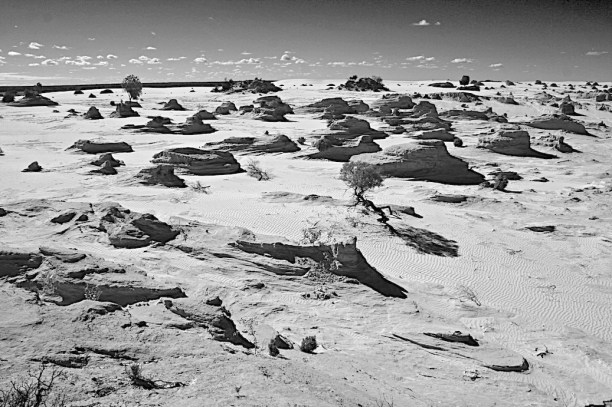
Vistas of flat, dry landscape with trees disturbing the flatness of the horizon greet the hungry eye. Huge sand dunes—the Walls of China—stretch for about 33km on the eastern side of the lake bed. These are constantly reformed and relocated by winds without barriers. Lunettes, irregular formations of soil eroded by wind and occasional rain, provide a fairy land for the imagination.
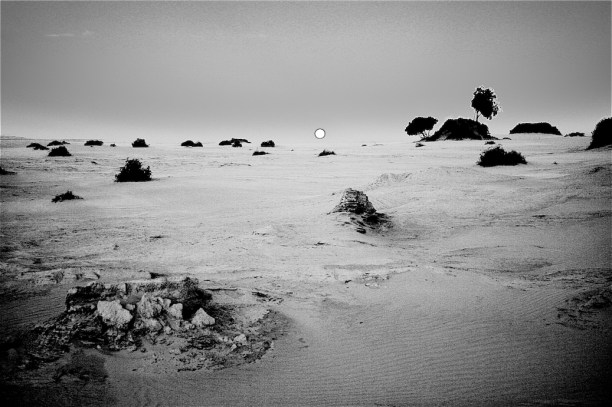
At night, as the moon rises from amongst the lunettes, the landscape is bathed in pale eerie light, like incomplete memories of precious moments past. Occasionally, lightening flashes over the distant horizon, a precursor to hoped for, but unlikely, rain.
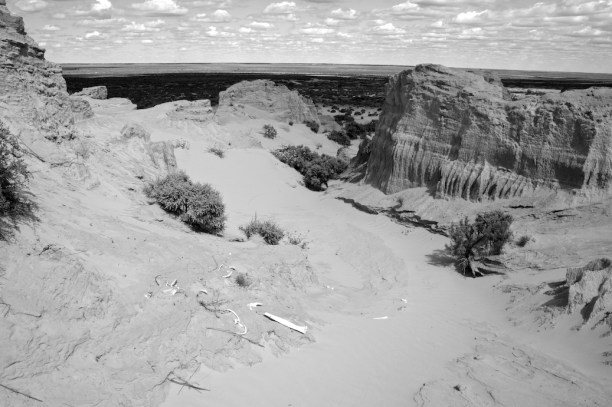
Wandering through the lunettes or around the vastness of the dry lake bed one comes upon the remnants of past life: long buried bones emerging from the soil. A small skull. Teeth; a jaw. Animals long dead like the long dead lake itself.
Amongst these exposed remnants were found, in 1969, human bones, Mungo Lady. Two more sets of human remains were later found, including those of perhaps the world’s oldest known cremation.
These people were from a culture that recognised death and maybe even the notion of a life after death. And they existed so long ago, at least 30 000 years in the past, perhaps up to 60 000 long years ago.
What changes the ghosts of these long buried peoples have seen and look down upon today. A landscape unrecognisable, a society without a sense of belonging, a peoples existing in splendid isolation from the elements, their food and the environment in which they live. Their descendants marginalised, wrapped in a long history, seeking acceptance, reconciliation and equality.
We live in the shadows of the Mungo people—or Universal Man, as Mungo had their contemporaries all across this wandering planet of ours, our Earth. We do not notice this shadow unless we still our minds and bodies and look around with eyes seeking the unseen, ears listening for the unheard and hands reaching for the touch of the untouched.
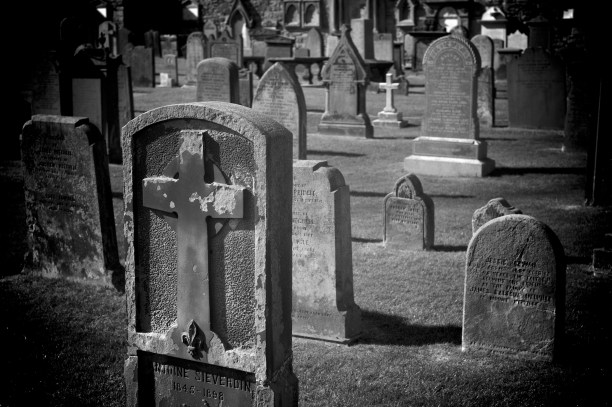
Mungo, lake and person; past, present and future co-existing and co-located. In time, we will all become like Mungo: a relic, bones in the sand, testaments to life long passed. What world will our ghosts look upon? What changes will they observe? What regrets will they hold? Will our bones become as sacred as those of Mungo? Unlikely, I think.





 Words and images