Words and images

Philosophy on the streets

Kaffeezimmer — 2018-09-25

Kaffeezimmer

Outside it is raining; not much, but enough to bring out the umbrellas. 
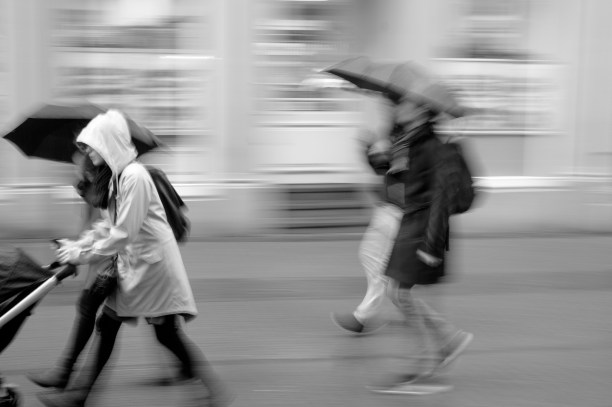
Photo of people walking in the rain carrying umbrellas

Inside the Kaffeezimmer the tables are occupied by coffee drinkers. Conversations fill the room. I do not understand them; they exist in another dimension.

A tattooed waitress takes orders, moving between tables and the serving area, delivering hot cups and cold pastries. Removing crumbed plates and cups stained with coffee remnants.
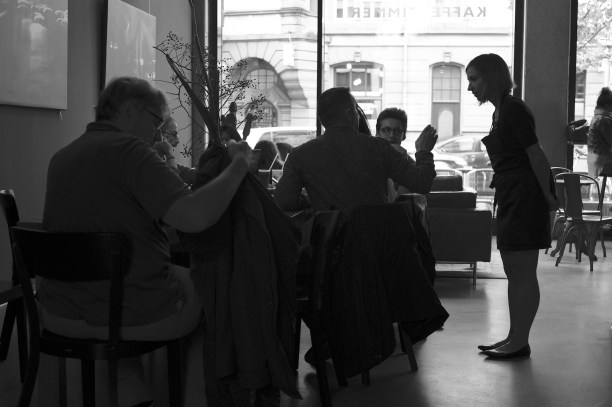
Photo of a waitress taking an orderIn front of me my camera awaits its next awakening, ever ready to capture passing photons.

My coffee arrives. Hot, strong, crema already dissipating like the passing of the rain outside.

Sip.

Two computers open; keyboards manipulating virtual words. Ones and zeros innately invisible, manifest through electrons and photons.

One couple in secret conversation; their heads together like conjoined twins.

Sip.

A regular flow of entries and exits. More ins than outs. Fewer empty chairs; fewer choices of where to sit, what to look at, though with smartphones who cares anyway?

Middle class coffee consumers I conclude. White Deutsch only. Others drink elsewhere, with their own familiars. Mixed ages, baby to me. Couples, groups, friends… and me.

Sip. Sip.

Punctuating human conversations are those mediated by smartphones. Thumbs engaging in violent conversation with virtual keyboards, strengthening invisible relationships. Maintaining friends and non-friends, all through the power of the electron.

I am (getting) old. Sip. My body is wearing out. Sip. Aches and pains more frequent. Cycling keeps me young, I like to think. Sip. Youngness is a state of mind, I am convinced. Sip. Sip.

Passers-by gaze through the windows, umbrellas raised against the diminishing rain as if water was harmful, an acid eating into our souls. What do they see in those transient glimpses of conviviality? Why do they look? What are they seeking? Are we, who imbibe in the dense, dark, brown liquid, like animals in a zoo, but with freedom to come and go as we please? To consume what we choose from a menu? Sip.

Others pass in ignorance, eyes closed to the goings on inside the poorly illuminated room. Why? Have they already passed judgement on us, we coffee drinkers, we conversationalists, we sharers of friendship, we shelterers from the rain? Do they find us unworthy or unnecessary even of attention? Irrelevant? Sip.

Perhaps it’s all about the coffee.

Sip. Sip.

Photo of a cup of coffee


On the ferry — 2017-06-01

On the ferry

One of the most egalitarian forms of public transport must be the ferry. These vessels cross untold numbers of rivers and coastal straits and link unbridgeable islands. Without them tens (hundreds?) of thousands (millions?) of people would have their travel freedoms tightly constrained. Regrettably, not all ferries are equal, especially in regards to safety.

Ferry passengers in some parts of the world willingly venture onto overcrowded vessels with woefully inadequate life safety measures just because this is the only way to reach their destination. In consequence, lives are lost when the vessel capsizes, hits rocks or otherwise comes to grief. Other parts of the world, however, strictly govern and manage both passenger and ship safety. Of course, the cost of a ferry journey reflects these different levels of safety, amongst other factors.

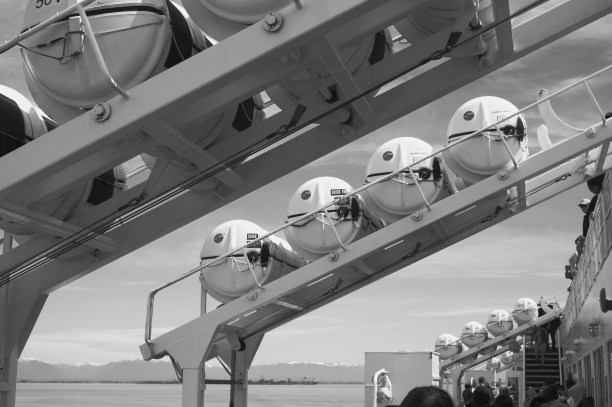
Photo of life rafts on a ferry

Once on board a ferry, though, life continues. Upper and lower decks become the centre of this life for passengers. Here they eat, sleep, converse and look at the scenery according to their tastes and needs. Some ferries cater to these life needs by providing extensive on board facilities like restaurants, wifi, private cabins, games rooms for children (adults have to make do with cabins) and charging points for mobile phones and computers. Other ferries provide transport alone, with everything else provided by the passengers.

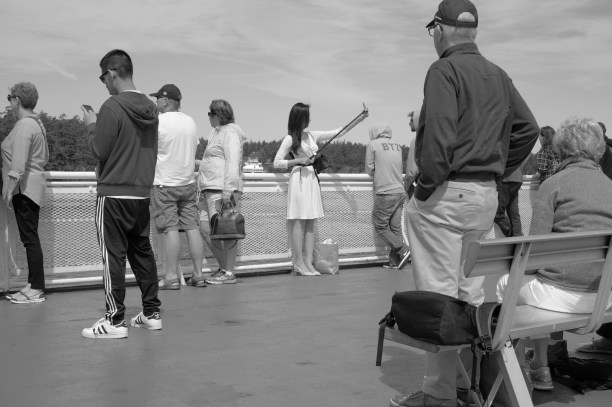
But being on a ferry is not part of ‘normal’ life for many passengers; it’s an occasional experience. So to remember the experience these infrequent ferry travellers take photos just as they take photos wherever they go. (Who doesn’t have a camera these days, if only it’s the one in their mobile phone?) Selfies are common, demonstrating for others that the passenger actually was there. (So no, it’s not a postcard I bought at some expense from the gift shop on board the ferry.) Group selfies (grelpies?) bond friends by providing memories of shared moments. Such moments of sharing remove the group members from the hustle and bustle of life on board the ferry and provide brief moments of shared solidarity. And when selfies and grelpies are published on social media it again demonstrates to the world that I was here. See what you are missing. Envy generated large across the internet.

Photo of a lady on the deck of a ferry taking a selfie while surrounded by passengers

But, why did I say that ferries are egalitarian? Simply because going on a ferry trip is generally open to every man, woman and their dog. And if a ferry gets into trouble everyone aboard is equally affected. Storms can’t be paid to weaken, shoals can’t be bought off, poor internet connections affect all passengers. While some passengers may suffer these events in the comfort of an expensive state room, when the ferry goes down, it’s everyone to the life rafts. And then the real nature of each passenger is displayed for all other passengers, and often, the world to see. Thanks goodness for the internet.

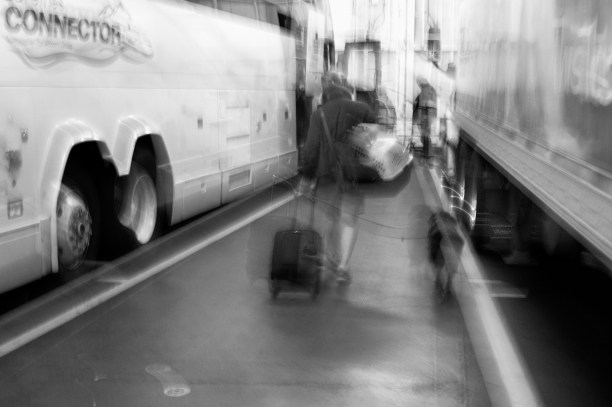
Photo of a man and a dog boarding a bus on a ferry

New Year and ephemeral change — 2017-01-02

New Year and ephemeral change

2017 is now upon us. For many of us a new year brings hope of a different, if not better, life than we had in the previous (and previous and previous and previous…) year. After all, that’s why we bother with New Year’s resolutions: great aspirational goals, too short lived in the doing, and too ineffective in the end. One might even suggest that such resolutions are (too) simple solutions to complex problems of human behaviour. But at least they represent good intentions for all their shortcomings.

When deciding we want to change something—our life, our car, our family, whatever—we compare what we now have with what we believe we will have after the change. Sort of like looking one way then the other before stepping out to cross a road.

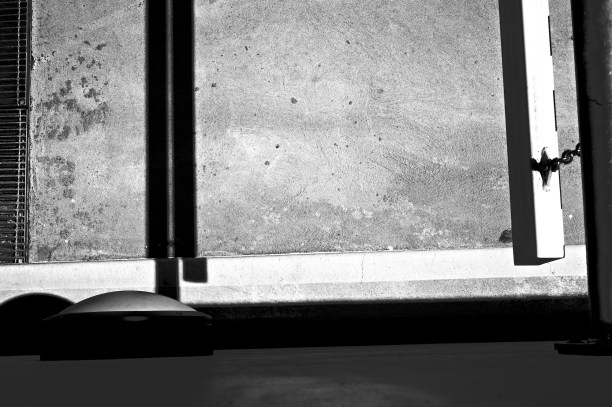
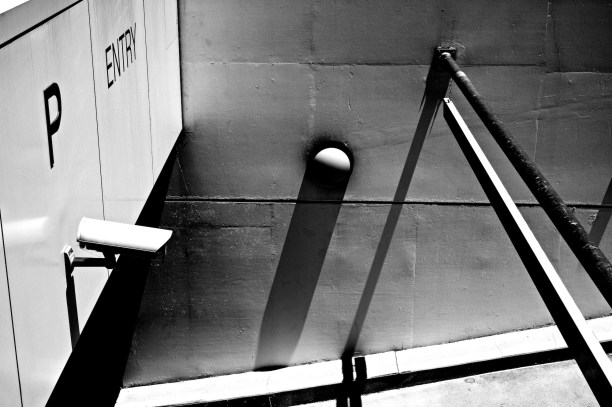
Looking one way we see the past. Memories of its failures, its barriers, its highlights, it’s nitty grittiness. But the shadows of that past, in which we now live, are strong, deep and pervasive. In them are buried lost and forgotten dreams, deeds and decisions. It is from this ghost that we wish to escape. Hence, we seek change.

Gritty photo of concrete

So we look the other way, longing to see a future quite remote from the past. An open door leading to somewhere different and better, somewhere safer, somewhere in which we can escape the shadows of our past and feel cosseted from life’s too-great challenges and threats.

Gritty photo of entry into underground parking lot

For some—those who embrace change and persevere with its implementation—that open door does indeed lead to fulfilled expectations. These few are reborn, renewed, reinvigorated, their resolutions achieved.

Yet for the remainder—the vast majority—change is ephemeral. It remains but a desire, wishful thinking, providing comfort through imagination. The cost of change is too high, its benefits too low. So we maintain the status quo. But not quite.

In the act of seeking change we have indeed changed. Recognising the need to change takes us one step closer to that open door of idealised future. Meanwhile, our haunting shadows remain, but with less oppression; our challenges become clearer; our perspective broader. All the while the nitty gritty of our life continues to both repel and attract us.

Another gritty photo of concrete floor

Life surely is perverse.

The empty night — 2016-12-22

The empty night

Empty city streets have always fascinated me, filled me with an emotion I cannot name.

My first exposure to this phenomenon—and when I first recognised it—was in London in the mid-1970s. Walking through the back streets towards Baker Street (to check out Sherlock’s abode, of course) generated this feeling of emptiness, of spaciousness, of loneliness, of the lack of life, human or otherwise.

A decade later, the same emotions arose, but in a different set of back streets.

Since then the feelings have come and gone as I explored and wondered the back streets of various cities around the world.

Always that feeling of emptiness and loneliness; of something alien.

Back streets at night are even more poignant and emotive.

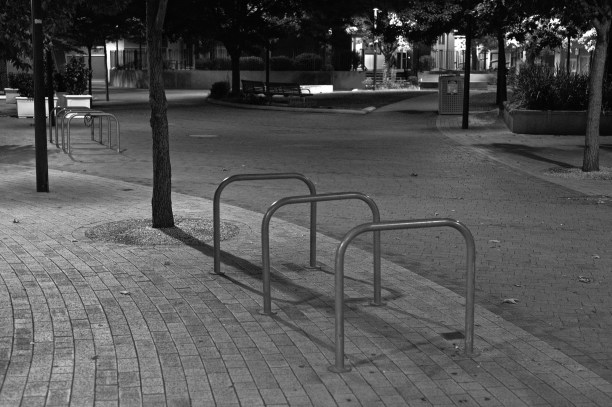
Empty street scene at night with bike racks in the foreground

There, diffused in artificial light, buried in shadows, fading into the black background, is the architecture of the absent working world: vacant bike racks, deserted streets, empty footpaths, silent coffee shops, soundless offices and customerless shops.

Counterpoised against this architecture of construction is the architecture of nature: planted trees, beds of wilted flowers, dried lawns. The constructed enhanced—and humanised— by nature. But there is nothing natural about this artificial entwining of the built and the grown. What is constructed is an overwhelming tension between the vacant now, the immoderate past and the dormant future.

Sometimes though, in this shadowed world of greys and blacks, are the signs and symbols of expressed life and half finished work.

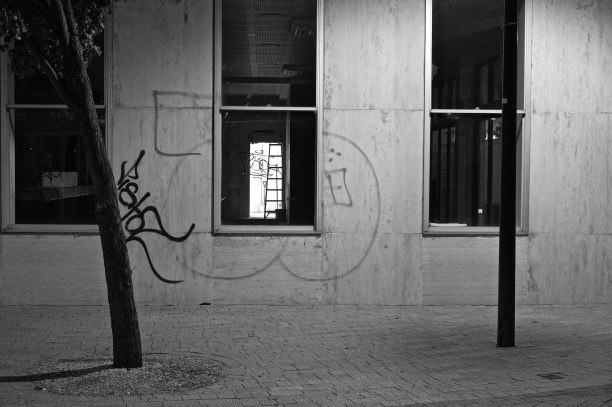
Night scene of wall with graffite

A workman’s ladder and shovel in an empty building. Graffiti. Sometimes a discarded bottle or can. Detritus of life; past life in progress; future life suspended in the unfinished past. Entropy facilitating time and life.

Yet these empty, dark, silent streets are not always so alien, so half-filled with life. Often they are also the backdrop to tragedy and comedy, to anguish and joy, to forgiveness and error, to compassion and hate. Private—or not so private—emotions shared in a public space. Hidden, but apparent to those who see.

Couple hugging in a street at night

Backdrop or not, empty, shadowed, back streets reflect the emptiness and shadowed cosmos in which we dwell. Perhaps, for me, they also reflect the inevitable emptiness and shadowless void of death which awaits me as it does all of us. Maybe this is why I am ambivalent towards such scenes: life hidden in the shadows of death.

Life is perverse.