Words and images

Philosophy on the streets

Interactions with art — 2023-03-05

Interactions with art

Our interactions with art—viewing, listening, contemplating, sometimes participating—are influenced by the context in which the art is experienced. Galleries (usually) are both the venue for experiencing art and the context for that experience.

Let’s ignore for the moment our own experiential context: our emotional state, our familiarity with the gallery and its collection, the style of art or artist experienced, our likes and dislikes in art etc. These factors all affect our experiences when interacting with art. And to keep things simpler still let’s just talk about art experienced in public galleries.

Our interactions with art are mediated by three factors: the location of the art (its venue: gallery location, building design, room design, distance travelled to experience it, ease of access to the venue, etc); its presentation (how it is displayed, its mounting, illumination etc); and its surroundings (nearby works, room colour scheme, signage etc). 

Many galleries, themselves, have pretensions of being ‘arty’, of being exemplars of good design and as providing a positive experience for their patrons, donors, supporters, visitors and collected artists alike. In consequence, they are not simply containers for art and venues for its experience. Indeed great public art collections are held (and must be held almost by necessity) in buildings of great architecture. Greatness is achieved through gallery design, construction, use of glass, steel, concrete or stone. Such greatness is intended to complement the collection of art but never to outshine it (well almost never), irrespective of awards gained by the container. 
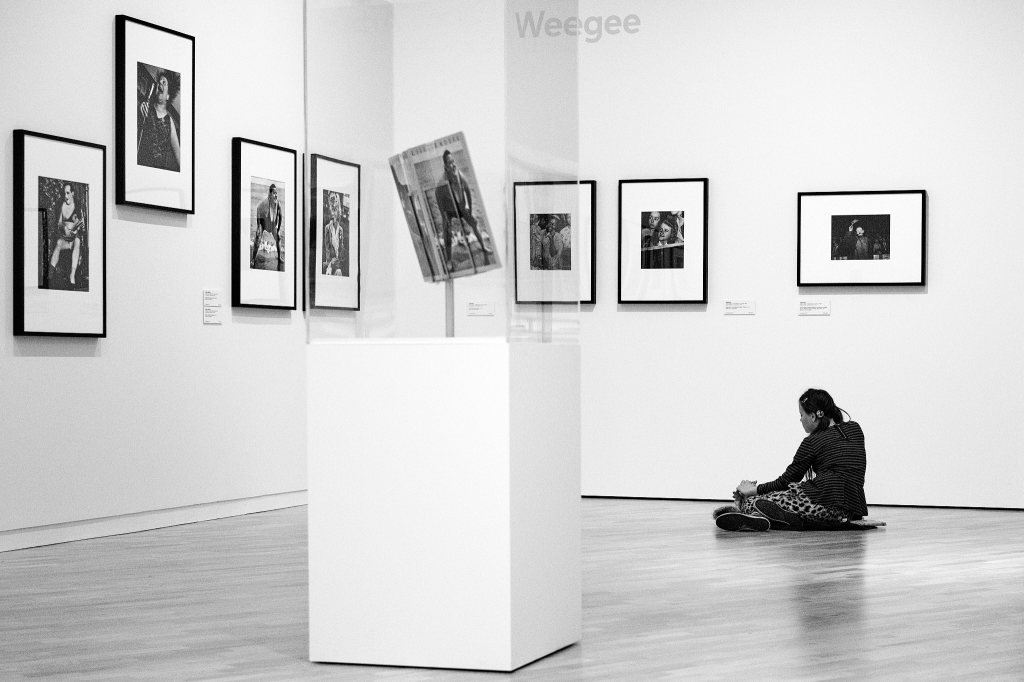
Woman sitting on the floor of 'great' public gallery contemplating the art works.

Lesser public galleries, operated by local councils, community groups or individuals, seldom have the same greatness in their physicality as do the great public galleries. Lesser galleries, while they may be purpose designed and built or be simply repurposed buildings, create a quite different experience from that had in the great galleries. Similarly, lesser galleries also tend to have lesser art, being defined of course depending on one’s interpretation of ‘greater’ and ‘lesser’ and one’s preferences for art disciplines and styles. 

Even so, lesser galleries have adopted an internal context—design, layout, presentation mode etc—that parallels, to a greater or lesser extent, that of their greater siblings. White walls (usually, or bare concrete), soft/dim lighting, open gallery spaces, artworks hoisted to eye level (whose eyes dictate that standard?), cool air, limited natural light and occasional benches or designer seats for contemplation of the art by the experiencer. Resources available to these lesser galleries largely determines the extent of the parallel. 
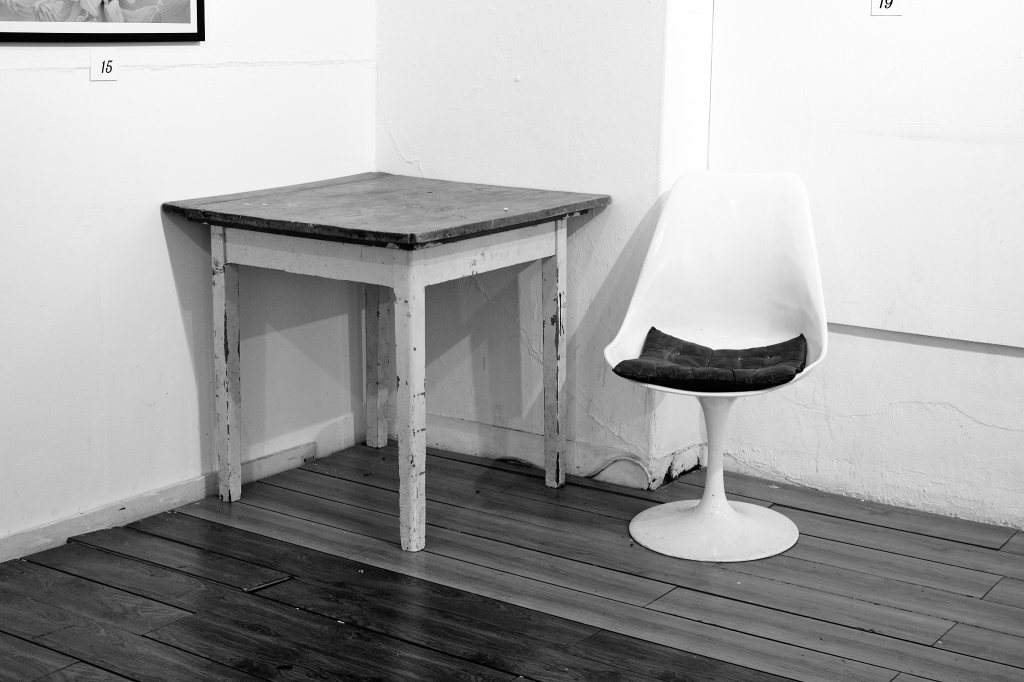
Image of a chair and table in a 'lesser' gallery.

Naturally, all these characteristics are intended to facilitate a worthwhile and meaningful experience while in the gallery. Mostly they do, but not always.

In some cases, the works of art essentially replace walls, so numerous are they, while sculptures and installations clutter walkways. Eye level hangings are generally inappropriate for children, taller people or those in wheelchairs. The air can be too cold, the lighting too dim, the seats too hard, navigation through the gallery can be confusing, signage can be written for the art connoisseur but not the uninitiated. 

Then there is the monetary cost of interacting with art in galleries. Entry fees too often extract from a family budget more than can be afforded prohibiting any visitation/participation and hence interaction. Parking—cost and availability—similarly can be a dissuader of experience as is lack of access by public transport. And one should never forget the cost for a family of a boosted interaction due to a coffee, snack or meal in the gallery’s café or restaurant.

All these features, we must remember, are not necessarily for the benefit of the experiencer, for improving our interaction with art. Many exist for the benefit of the art exhibited within the container or for the container (its owners) itself: to support longevity, to maintain or preferably enhance the investment value, and to demonstrate cultural worth and relevance. Such intentions are warranted, but too often come at the expense of the experience of the art. That is why so many people view art, in all its forms, and its experience as the prerogative of a select few, especially the few who have the most resources in society. 

Interactions with art in other contexts—in the home, private galleries, informal spaces, in front of a television or computer monitor/phone/tablet—offer a different range of experiences. Gary colours, bright screens, loud music, movement, crumbs from crisps, the scent of pizza, and so on. Experiencing and interacting with art in these contexts is more under our control than it is in public galleries. And the art itself is often quite different from that held in galleries, more relevant to the experiencer. But the art is not, in itself, necessarily of lesser quality or value even if it is mediated by technology: it is merely different, reflecting different experiential needs, different priorities and different values in life. 

As a society we all need to experience art in some form but in our own way and on our own terms. Art can take us away from our daily challenges, can satisfy creative needs and give us insights into the workings of different minds. Even art that does not satisfy has its place: it reminds us of the complexity of life and of the society in which the art is created.
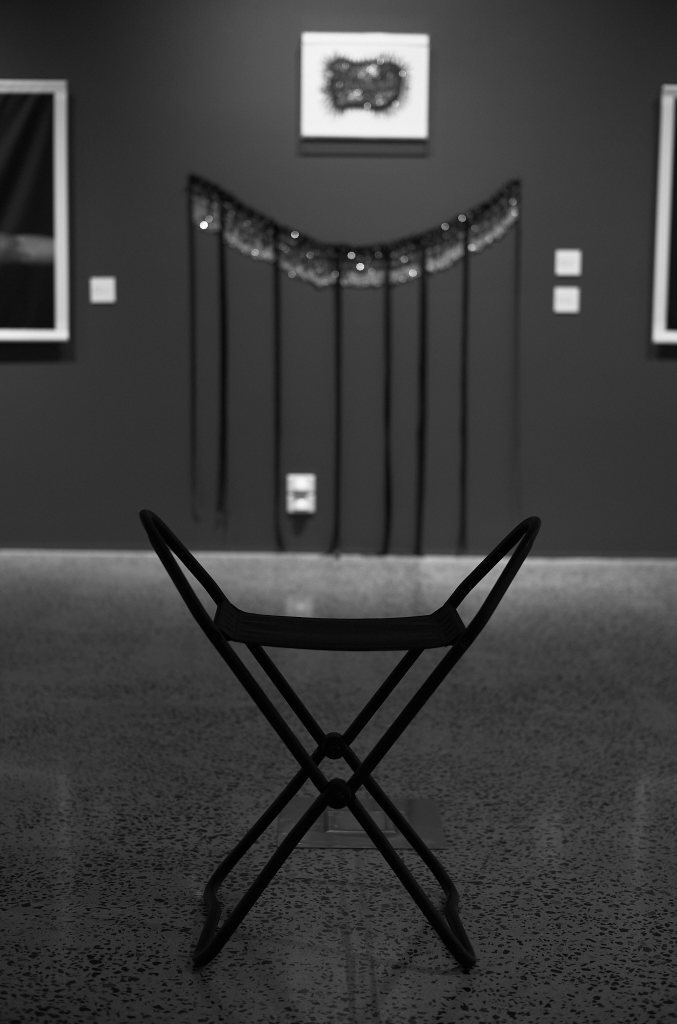
Image of a chair in a dimly lit 'lesser' gallery with an art work on the wall behind the chair.

Which do you prefer for interacting with art, greater galleries, lesser galleries, informal contexts? All of them? Or is art something for others to interact with, not for you?
The stories we (don’t) tell — 2022-12-05

The stories we (don’t) tell

We all like a good story: happy or sad, of adventure, of loss, of perseverance…of experiences in and of life.

Storytelling is fundamental to us as humans. We tell stories, listen to them, seek them; sometimes we avoid them. Stories inform, persuade, challenge, entertain, strengthen and even weaken or break relationships. They punctuate our lives; they subsist in our being, in our environment. Without stories our lives loose much of their meaning.

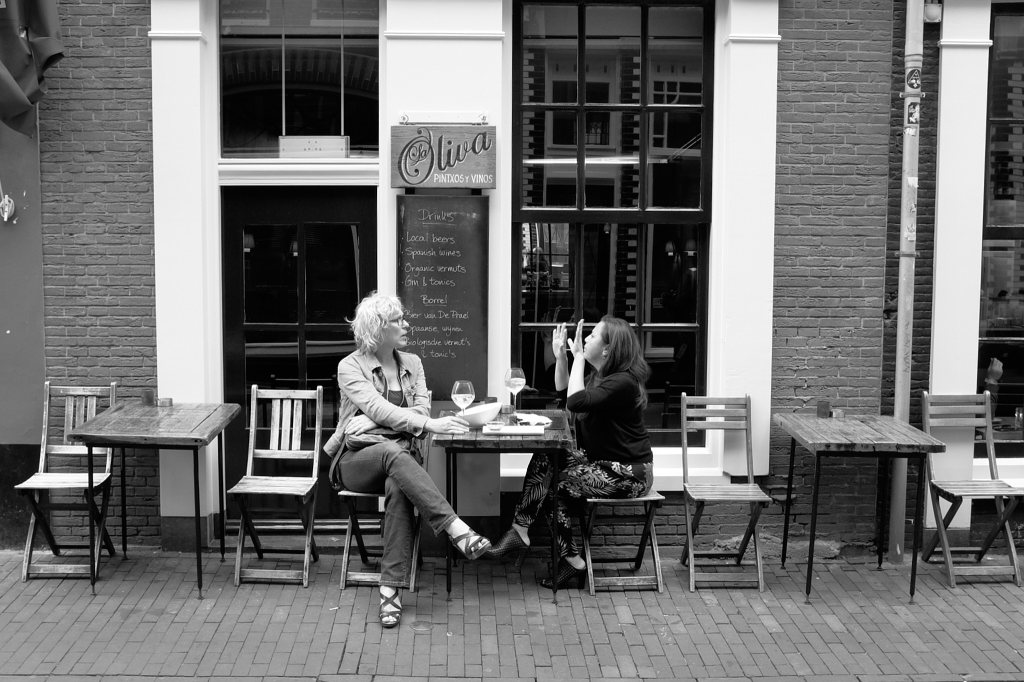
Two people in a cafe sharing a story with one person using expressive hand movements

Many stories are true, reflecting lived experience. But some are false, deliberately so. What makes one story true and another false is the basis of the story and its intent.

A true story is founded on, and relates, an event, action, process that actually happened. And while the telling may be embellished for storytelling purposes its intent is to share a personal experience. In the sharing may be found release, comfort, understanding, support, affinity, oneness, for both the storyteller and story taker.

On the other hand, a false—untrue—story, even though it may be based on some truth, has a different intent. Such a story may be designed to persuade, entertain, mislead, confirm biases or otherwise support a particular action or point of view.

When consuming a work of fiction—in any medium—we usually suspend our disbelief and enjoy the tale. We know it’s false after all. But sometimes, for some of us, our disbelief is replaced by belief, our biases reinforced, our beliefs confirmed. Some of us also consume truth as falseness, more evidence to support our beliefs and biases.

Fiction intended to change belief has a history as long as that for fiction intended to inform morals and behaviours. These later fictions are found in fables, parables, allegory, fairy stories; the bedtimes tales we tell our children both to instruct and entertain. To such fictions we respond (or expect the story taker to respond) with reverence, humour, belief, acceptance or understanding. The more profound the intended message the more we—the story taker—are challenged to understand, to grasp the insights offered through falsity.

So significant are stories to us that we laud successful stories and story tellers: Academy Awards, Pulitzer Prizes, Nobel Prizes, Booker Prizes, Walkley Awards. So many awards; so important to so many societies. But only for stories that exist in physical form. 

Verbal, oral stories are transient, not captured in a document, physical or digital. Yet such stories have been around for much longer than recorded stories. First Australians, for instance, have been telling stories for tens of thousands of years. Such stories persist because of their importance to those societies; they are part of the culture, integral along with behaviours and beliefs.

Then there are other stories, not spoken or recorded.

Some stories exist in our actions. They are implied. Open to reading and interpreting. There to be consumed if noticed. More personal than the truest ‘true’ story; their intent unclear, transient, confused. So much richer; so much more profound. So fleeting.

Two smiling women, one highlighting a banana she has placed at her waist.

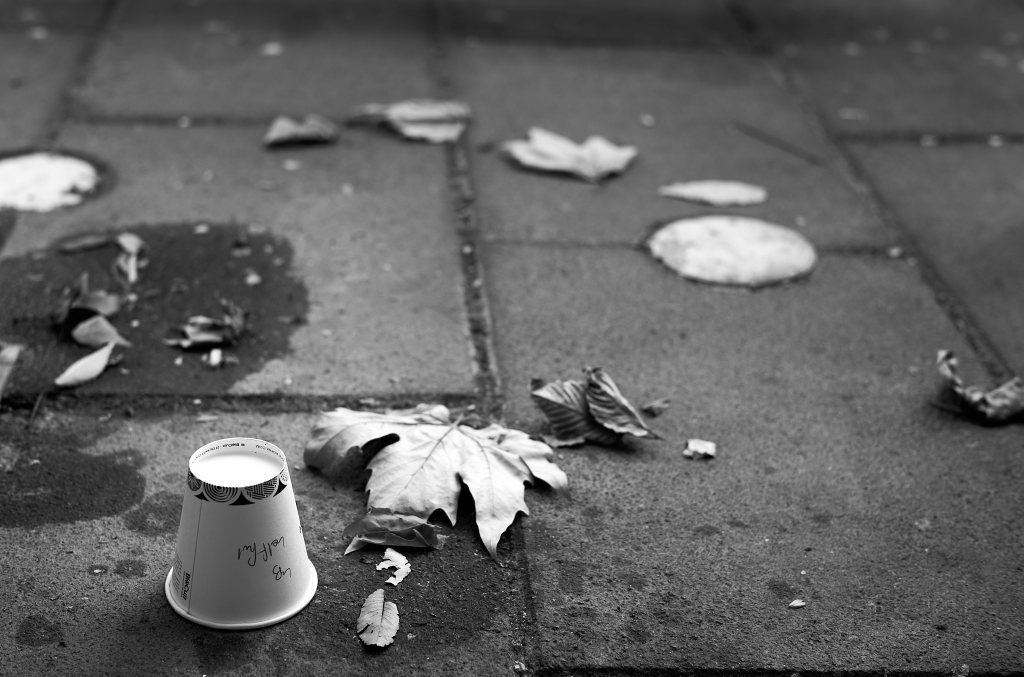
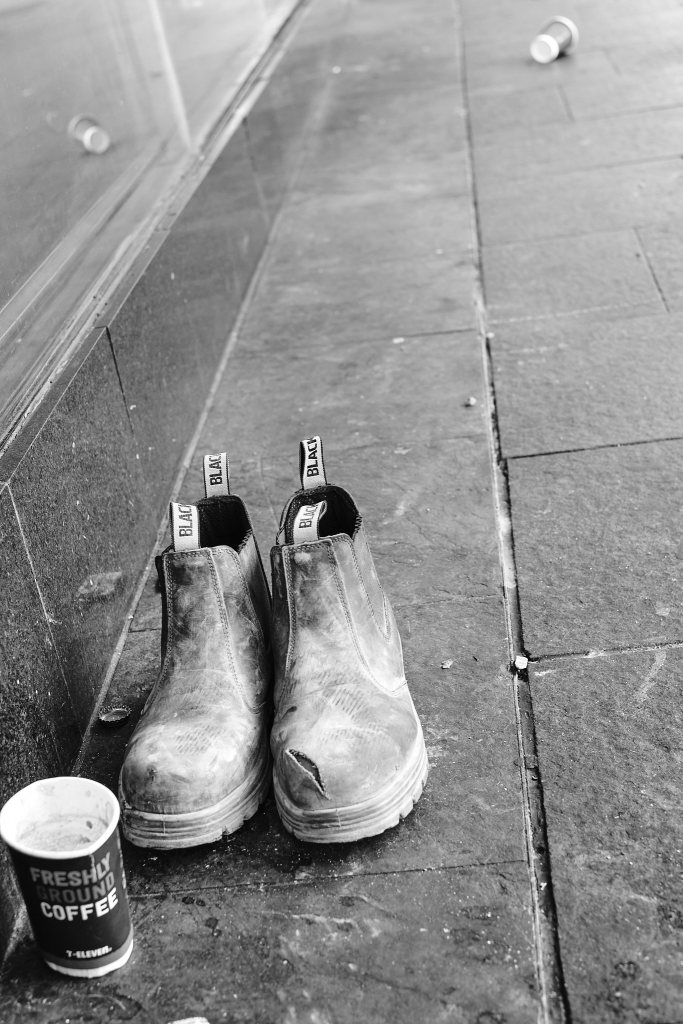
Finally, there are stories resident in the physical world that will never be told. Objects abandoned, buildings derelict, weed strewn vacant lots. The detritus of our society. How did these come to be? What events lead to their current state? What laughs, tears, fights, loving occurred there or were occasioned by them? Was the coffee cup discarded before it was empty? Was the coffee enjoyed? Why was it discarded just there? While there is always a back story those stories will never be told because no-one is interested in them; they are the trivia of life, of our civilisation. Yet those stories tell us as much about ourselves as any other story. They simply have no story teller. And no story taker.

A discarded take away coffee cup on the ground surrounded by leaves and detritus of the city
What’s in a name? — 2022-08-19

What’s in a name?


During my days as a photography student, many years ago, I was always challenged by studio work. It wasn’t the studio per se—the space, the lights, the props—that disquieted me. Rather, it was how all those aspects were to be brought together in front of my camera’s lens. I felt inadequate in this challenge so much so that I focussed my photographic efforts on subjects outside the studio. I went outside into the streets looking for scenes, objects, people, activities whose nature, arrangement or lighting caught my eye. And those I imaged.


Over the years I developed a nomenclature for much of my style of image making. The smallish, often unnoticed, objects I imaged I called extracts. Extracts were captured and removed from their context—time, location, culture—and isolated onto various sizes and types of photosensitive material. Extracts—the unusual, the familiar, decontextualised, isolated—were what really piqued my attention.


They still do.


And, in my older age, after much deliberation about the nature of photographs, I decided they required a new nomenclature, one better reflective of their nature: moments of place or extracts of time.
For what is a photograph but a moment of time recorded, a scene extracted from its context. Time is stilled, excised from our perception of its flow, forever preserved. As was the scene, so shall be the image, forever (notwithstanding any subsequent artistic manipulation).


Extract or not, all photographs are subject to a post-exposure culling. Many images (under exposed, blurry etc) are simply and easily discarded, deleted from a memory card or hard drive (or thrown into the bin if on film). Others lie deeply buried in islands of ones and zeros, perhaps listed in a catalogue, perhaps not. They are abandoned: existing but not wanted or needed, accessible but not sought. A select few images experience a brief flurry of interest: printed, shared, published.


Whatever their disposition, a photographic collection contains a history of its creator’s awareness, a timeline of the locations visited, a sequence of interactions with the world. In short, photographs are our past, documented in fractions of seconds, our own, personal, moments of place, our individual extracts of time, excised from the trajectory of life leading towards our ultimate end.


Life—all life—abounds outside the studio, in the streets, beyond the towns, in dark alleyways and on bright sands. As a photographer we document what appeals to us; we take instants of time and place and give them an external existence. And in doing so the images say more about us than they do about their subject.


So here’s to extracts.

A moment in time — 2020-11-26

A moment in time

Time is, to me, a most enigmatic concept.

I can think of several approaches to the nature of time:

  • Time is a real phenomenon. It exists now and always has. It was created along with space and matter.
  • Time is an emergent phenomenon, emerging out of the creation of space and matter. A child of these physical properties, if you like. Something separate but related. 
  • Time is a construct, a concept humanity developed to assist in making sense of the seemingly senselessness of life, death, space, matter, the universe and whatever else we do not understand.

Whatever its nature, we have chosen to accept time as an independent phenomenon and to use timepieces to monitor it: water clocks, digital clocks, mechanical clocks, atomic clocks. We monitor time and its passing to provide one context to our life, the universe and the activities we engage in. We measure our work output in terms of units of production per unit of time; we assess the age of ourselves, others and the universe in terms of years. We agree to meet or talk with a friend or colleague at a particular arrangement of digits or hands on a clock face. And so on.

Without a sense of time our lives would exist in a void and be without rational bounds. Time and its measurement, are thus tightly integrated with our lives, its physical, emotional and spiritual aspects. For instance, imagine literature and stories without time: streams of consciousness; always in the now; no past from which to learn, no future to look forward to. And no heaven or hell, each of which is time-based (post-death). Everything is only now.

Without devices to quantify time, we live by the physical world: movement of the sun and moon, the ebb and flow of the tides, the changing seasons. Noticing and remembering these changes in the physical world provides the simplest of time pieces. Simple, but still sufficient for societies and civilisations to develop and function. Replacing memory with devices like sun dials, buckets of water and calendars, provides a more abstract, and specific, measure of the passage of time; an intermediate step towards personal, portable, always available time keeping.

But without sophisticated and accurate time keeping devices—clocks—there would be no GPS satellites, no computers, no television. There would be no modern Olympic or any other game or activity that relies on time, however short it might be—hours, minutes, seconds or microseconds—to provide a start and end point. Without calendars to measure the passing of longer periods of time, we would not know when an election was due, or when our holidays start and finish, when our children are due to be born.

Without widespread use of clocks and a shared understanding of their role in organising social and private activities—and indeed of the role of time in organising life’s activities— coordinating actions across vast distances becomes difficult. Even locally we have ‘rubber’ time or flexible time, in which tardiness is accepted. How could it be otherwise?

What then is a moment of time? A duration of how much time? A second, a day, a month? We all have moments in our lives that we remember and some that we wish we could forget. So why is one moment of time more important to us than another, to be remembered or forgotten? It is, I believe, because that moment is more meaningful to us than they myriad of other moments that constitute our lives.  If we measure our lives in terms of significant events or activities, what is the relation between these phenomena and time? Is meaningfulness a component of time? Does time reside within us or is it external to us, in terms of meaningfulness? 

Ultimately, does it matter what time actually might be or why some moments are better or worse than another? What matters is the meaning associated with the moments. What matters is how those moments and their meaning combine to make us what and who we are and how they influence our interactions with the larger world that provides the context for our meanings. Thus meaning comes from location (where we are the time of the meaningful experience), action (what/who we see there), experience (what we are doing there) and others (who we share the experience with). Each of these aspects of meaning comes from a moment in time, a long moment or a short one. Time manifest.