
There’s a certain simplicity in cycle touring, a simplicity founded in routine. To get from A to B, perhaps via C, D, and E, one follows a pattern: arise, prepare for the day, ride, settle down at the end of the day. Repeat day after day after day after day until one finally arrives at B.
Simple routine. Profound meaning.
Meaning is construed by each of us according to our experiences, hopes, expectations. Different people attribute to the same act different meanings. Sometimes those meanings are similar, at other times they are quite different. But the meanings are never identical just as no two people are identical.
So cycle touring means different things to different people. It may mean escape (from other routines, from relationships, from the confines of urban life), adventure, self exploration and discovery, or simply the pleasure of being outside riding a bicycle, possibly in a new location or culture. It may be, at the one instant, all of these or none of them. Such is the vagary of meaning.
My reflection on cycle touring and its meaning is as a result of preparing a talk on my tour down the Rhine River, from Andermatt to Amsterdam. My mood is pensive, my reflections informed by a longing for escape to another fulfilling tour and the timelessness of retirement. Three episodes of mountain biking a week do not fill the gaps in my life, though they represent a routine. Checking email several times a day is not so much a routine as an expression of hope for interest, adventure, excitement, shortcomings in my life. Three meals a day become a bore, especially their preparation.
So my thoughts turn to a mobile life complemented by musings on the viability of living in a small space. With many fewer possessions. Too many of those I now have bind me to the past, both its highs and lows. Knowing this I remain unable—or is it unwilling?—to reduce the stockpile of things attesting to past life.
Cycle touring requires small spaces—panniers, bar bags, back packs—and few possessions. There is no room in these small spaces for past life, other than those recorded in digital images and words. Space is required for those objects that maintain the routine of the tour: clothes, food, reading material (digital?), bicycle spares, digital devices and their accessories. Perhaps camping equipment, if essential to the tour.
Instead of ruminating on life’s past successes and failures, the touring cyclist ponders the next few kilometres or village, wondering what they will offer, how one will be affected by them. When thoughts do turn to the past those thoughts are of the life of the routine: past campsites, people met upon the trail, vistas, even mechanical matters. Experiences.
Experiences are the cornerstone of cycle touring, the building blocks of meaning, the creator of character. What the cycle tourist lacks in space is compensated for by an abundance of experiences, not all of which are pleasant, but all of which are meaningful.
To venture into the realm of cycle touring is to embark upon a quest for meaning, a quest mediated by routine. Don Quixote on a bicycle.
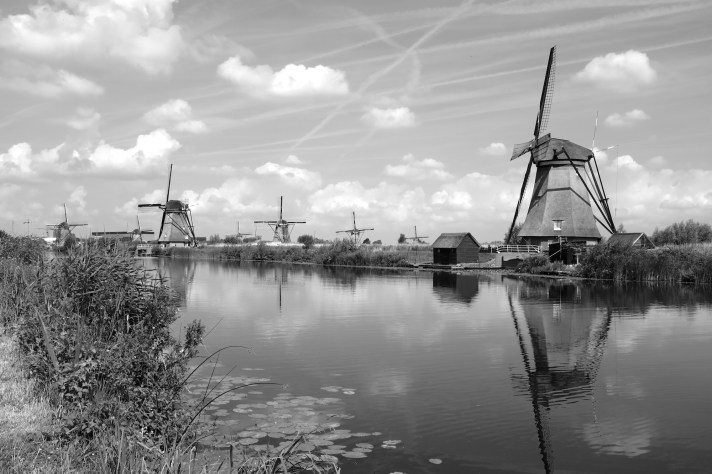
 Words and images