
Cathedrals, mosques, temples. For millennia religious groups have sought to construct places of worship that reflect their particular faith and their aspirations for that faith and its followers. Sometimes these aspirations resulted in buildings that soared into the sky, highlighting the smallness of the worshippers in comparison to the greatness and powerfulness of their god. For some, such heights also offered the hope of bringing the worshippers closer to their god.
Occasionally this desire for closeness to god reflected more the foibles of human nature than the pureness of the human heart. This produced, for example and for a while, a ‘competition’ to build the highest cathedral in Europe.
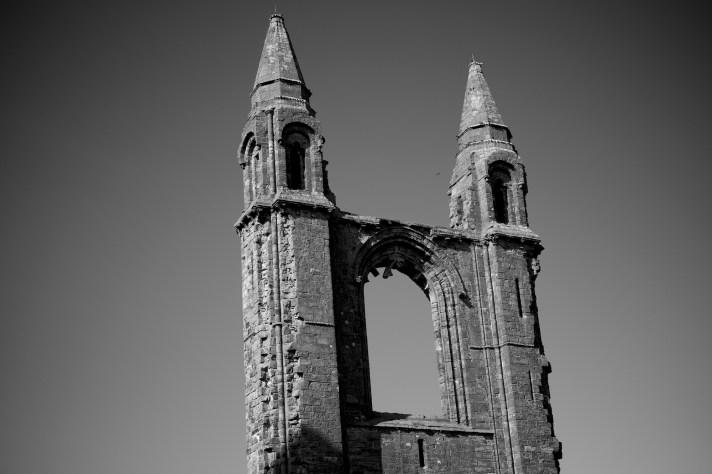
But the strength of faith and stone cannot withstand the strength of nature: rain, wind, earthquake, storm, tsunami, flood, fire. Combatting these eternal entropic processes requires of us constant vigilance and action. Despite the strength of faith of worshippers, despite their best efforts, despite their desire to glorify their god, their places of worship inevitably crumble, succumbing to nature’s constant buffeting.
Ruins are all that so often remain. Temples buried under verdant vines and trees, or disguised as farmland hillocks, or left as rocky half-walls on desolate moors or isolated islands. For some, however, ruination provides a continuing life, as tourist attraction where all religious connotations are replaced with historical, architectural or aesthetic values.
To our modern minds some ruins—those with more substance or preservation by current hands—conjure up visions of monsters, foreboding disaster, threatening even more ruination.
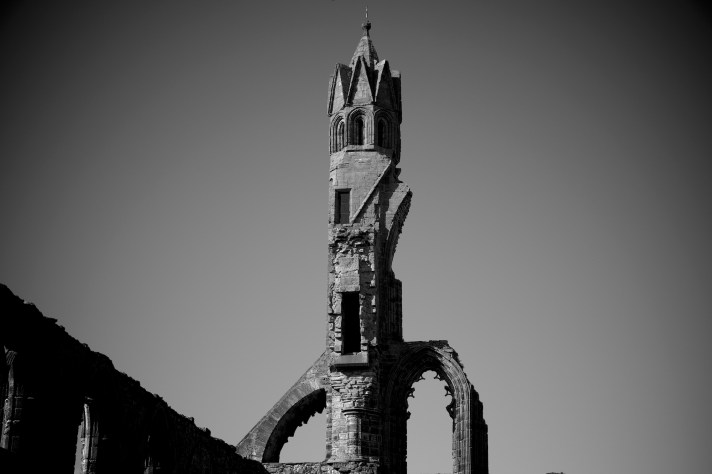
Archaeologists and their brethren help us make sense of ruins whatever their condition, wherever they are found, whatever their original purpose. They bring to life those who built and used those before-ruins so offering us an informed view of the past.
At a larger scale, ruins allow us to see our future, personal, social, cultural and physical. Ruins inspire us, fill us with awe at the ever-there ingenuity, creativity and strength of our species. They make us wonder about who made the before-ruin, why they did, what happened in those places and, finally, why they ended up ruins at all. In this way ruins go some way to satisfying our always-there need to make sense of the world and our place in it.
But ruins also remind us of our own eventual ruination, death. Yet even in death we have our ruins: the decaying, faded gravestones that attest to our existence, that say we were here, we made these ruins.

 Words and images