
Shadows, those volumes of darkness beloved of visual creatives—painters, photographers, movie directors—enfold us in their invisibility. We see or do not see them as our mood varies, as our view dances from point to point creating a gestalt, even a story, of our reality.
We see the world writ large in shadows, often imposing, often subtle. For their part, shadows protect their charges in anonymity allowing our imagination to construct what is not, or is only partially, visible. Yet many objects under the influence of shadows use that protective cloak to display their own innate beauty, to create their own contrasting gestalt, their own story.
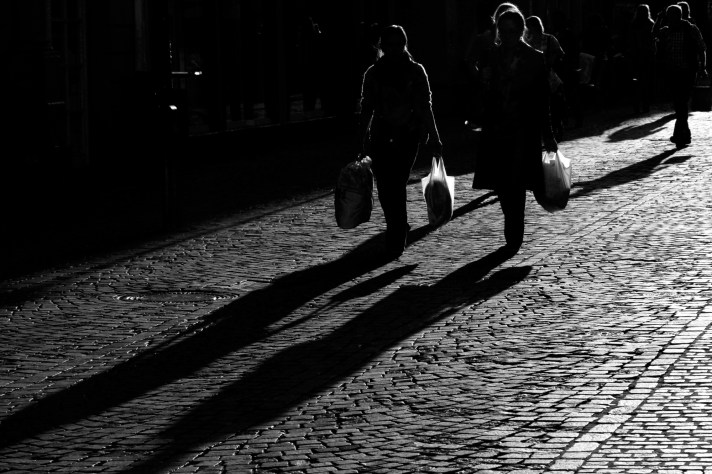
While most shadows are arbitrary, a product of the the interaction of the vagaries of nature—wind, sun, season, time of day—and object, others are deliberate creations. Amusements for our humour, our imagination, our sense of fun. We create, destroy, manipulate, intercept light just as we create, destroy, manipulate and intercept the physical and biological world so dependent on that light and its resultant shadows. Like us and their sibling natural shadows, created shadows are ephemeral. What remains after their passing is just a memory or an image of absence.
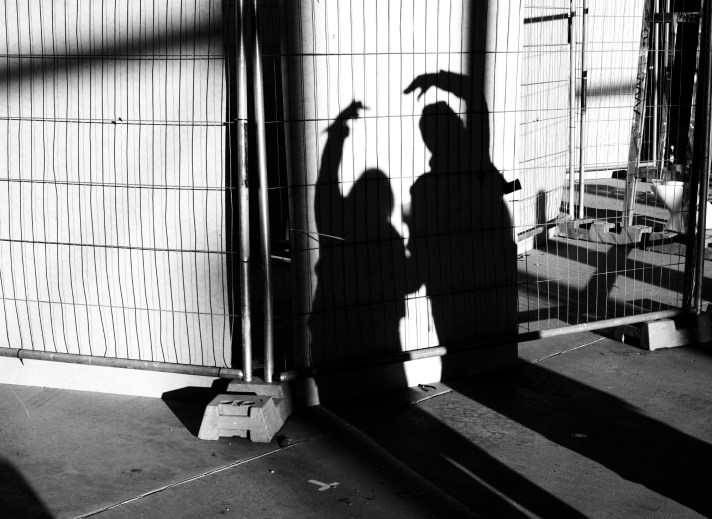
By means deliberate or accidental, shadows can also reveal, through their absence, that which is there. Such non-shadows are as pervasive and invisible as the shadows with which they co-exist. And when they do reveal themsleves we forget the shadows and their old gestalt. Instead, we create a new gestalt, a new story, centred on the non-shadow. If we are lucky, or so inclined in our storytelling, that new story is richer, more fulsome and more profound than the old one told by the shadows alone.

It is these shadow/non-shadow stories that reflect our inner selves, that tell us who we are and where we stand in relation to light and the cloak of shadows.
 Words and images